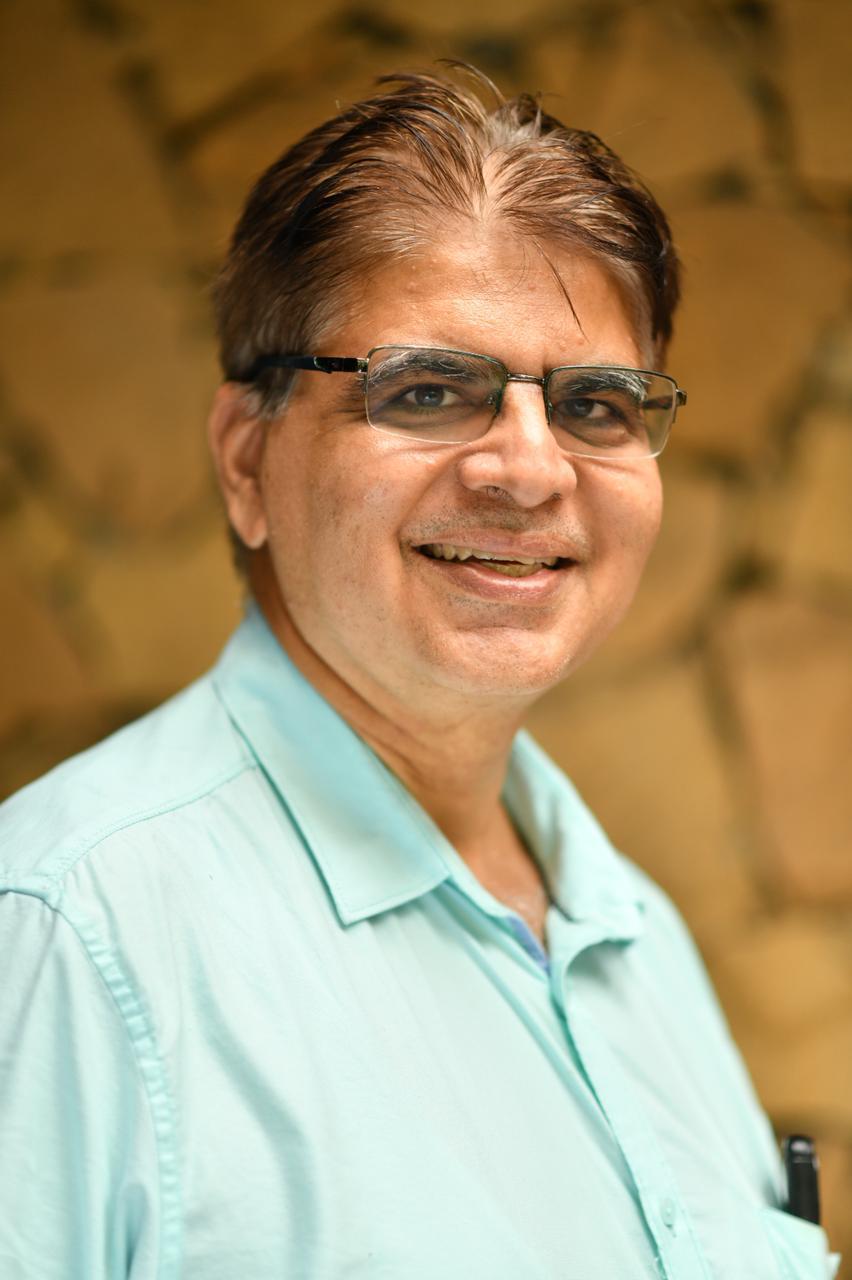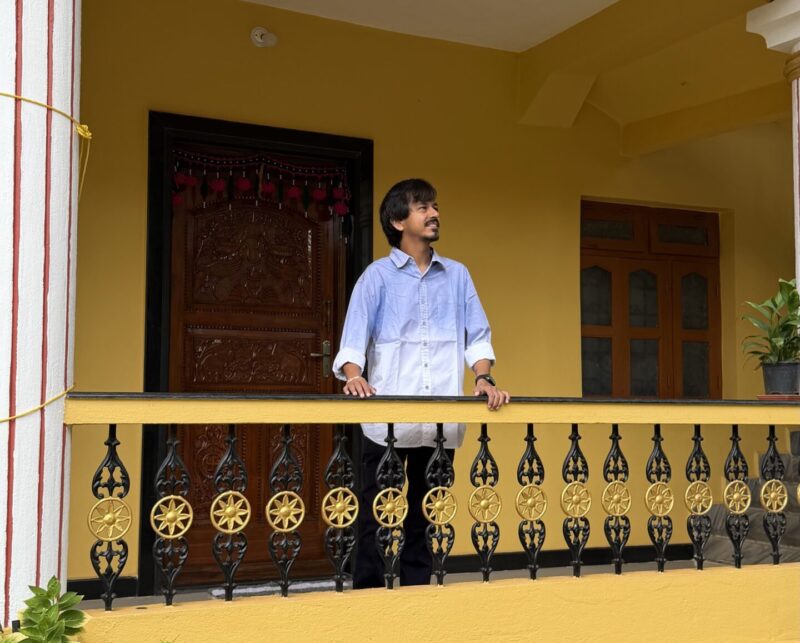

Hemanshu Joshi, Kotabagh, Uttarakhand
Forest Side Farm happened by chance in early 2016. I was working abroad in the Middle East (from 2002 to 2016)as Head of Project Management for an IT and Telecom company. I was a full-distance marathon runner. I was heavily into outdoor activities. Camping, off-roading, and long distance training kept my weekends busy. As a result, I had strong physical and mental resilience.
In 2015 December I came for a vacation, and my father fell ill at that time. That is when I realised I should be with my ageing parents to look after them. I resigned and returned to India in Feb 2016. At that time, I had no idea that I would ever become a farmer.
In 2011, I purchased 2.5 acres of land. When I returned to India, started looking out for opportunities within Haldwani and nearby areas. However, professional IT services were not in demand in that area. So I decided to attempt farming the land that I had purchased in 2011.
My passion for outdoor activities, running, really helped me stay afloat, perform intense manual work on the farm, and maintain patience and perseverance even to this day.
Challenges of becoming a farmer with no agricultural background
When I started farming, I had no background in agriculture. Each season would fetch a paltry sum somewhere around 12000 to 15000, which was nowhere close to economic sustainability. I started researching and reading about farming in different parts of the world. This helped me come up with the strategy:
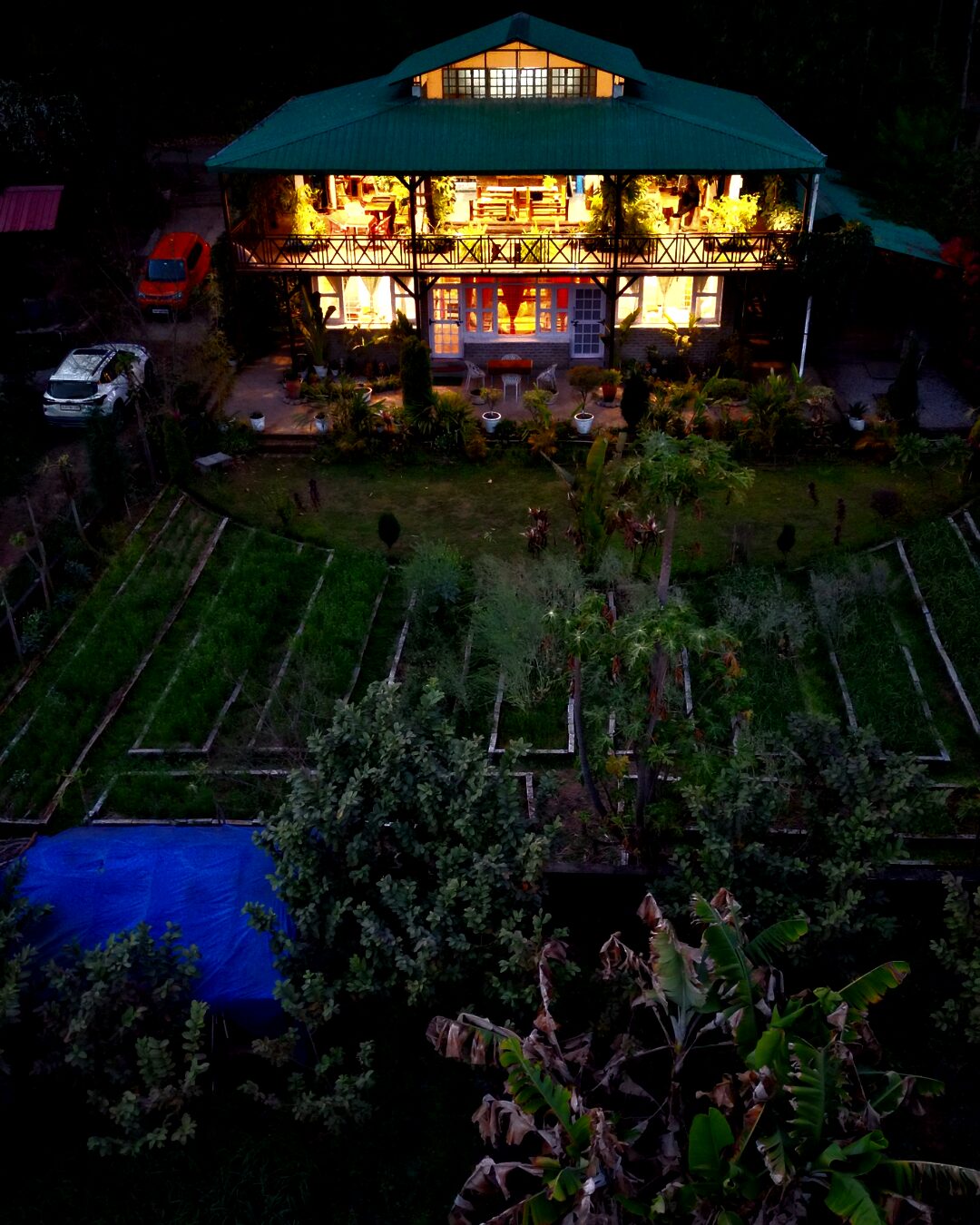
- A multi-layered poly-cropping model of a food forest that boasts 525 trees of 32 different varieties. Canopy trees like avocado, mango, litchi and cheeku, shorter trees like guava and citrus fruits, and between the trees we grow all our seasonal dals, cereals, spices, herbs, etc. Under the soil, our turmeric, taro roots and ginger grow.
- Natural farming is a wholesome, well-calibrated, resilient, self-managing system. It has perfect timing for everything. It adjusts itself with changing parameters. By aligning ourselves with nature, we naturally become part of abundance, and this relationship helps us thrive. We follow regenerative farming practices. Which means we focus on building the soil.
- We do not till the soil. Microorganisms thrive in the moist, darker spaces. At our farms, we create a natural habitat for microorganisms to thrive. This highly active soil ecosystem, thriving with microorganisms, makes the land very fertile and rich.
- We chop and drop all the weeds, which decompose and provide nutrition for the soil. We have been following this practice for last 8 years.
- We do not add any external inputs like manure, fertilisers, pesticides or weedicide of any form.
- At Forest Side Farm, there is a self-regulated prey-predator relationship, with no human intervention. It is a natural habitat for a variety of insects and birds. There is always a predator present to balance the ecosystem. Thus, our food forest is always abundant with flora and fauna that maintain a proper ecosystem.
Using this natural farming system, we have created a portfolio of farm components:
* Horticulture : Fruit trees – perennial. We started with guava plantation and now we have 32 different types of 500-plus trees. However, most of the fruits are consumed by the birds and bats, and we barely get anything to sell and generate income. The idea is, we should have seasonal fruit in evey month.
* Dals and Cereals ( Rabi and Kharif): We grow all local dals and cereals that grow in the region. We are self-sufficient for our dals and wheat. We keep enough for our own consumption for the entire year, seed, and then sell the surplus.
* Spices: We grow turmeric, coriander, fenugreek, ginger and garlic. We plan to increase the area of turmeric as it is doing very well in our area and there is a lot of demand for our turmeric across india and abroad (B2C model). We keep enough for our own consumption for the entire year, seed and then the surplus is sold.
* We have our chamomile buyers across India and the world – Norway, USA, Middle-East. Our chamomile is considered the best because of our regenerative farming practices. Also, since we cultivate it for our own customers (B2C model(, we pluck only the flowers that have real medicinal value, and thus our customers find our chamomile the best amongst all that is found in India.
- Apiary : We have our own honey cultivation. The bees pollinate our plants and crops, and we sell our raw honey to our customers across India and abroad.
- Seasonal vegetables
Challenges of opening the homestay
* Infrastructure development cost: Where to draw the line. You cannot keep pouring in with no assurance or clear timeline of returns. At the same time, no one in my family had ever done farming or business. So there was a fear of loosing hard earned savings and I was gambling everything away.
* Finance: Earlier I was a NRI, a high net worth individual and banks would call me incessantly when I would be in India offering me loan and credit card. However, when my status became that of a farmer, there were no loan options.
* Competition
* HR: It is always difficult to get dependable human resources.
Overcoming Challenges
* Since I had no prior back ground of farming, I could work on a blank slate with no preconceived notion. Create my own version of food forest breaking away from conventional methods. With lots of research, experiments, inspiration from what others are doing from across the world became the blue print of what exists today.
* I worked for 2 years by myself building the farm all alone or may be temporary workers. This gave me hands on experience on understanding and appreciating the farming practices, its challenges. The people who joined me are dependable and begin to align with the philosophy after some cajoling and coaxing.
* Since I was funding the project with my own past savings, everything was done in phases. I would take one baby step forward, ensure that we stabilize at that step and then move to the next. First we learnt the ropes of farming with mono culture, then polycroping model was introduced. Then came the house for personal stay. Resources were collected. Then the house was converted to a farm stay. This has made the entire system resilient and strong.
* Since it was a boot-strapped operation, the solutions, design, infrastructure, everything is very modest, creative and authentic. It is not showy or over powering. It is cozy not flashy.
* When we align ourselves with nature, nature supports and this relationship helps thrive as mentioned earlier.
The distinctive features of Forest side
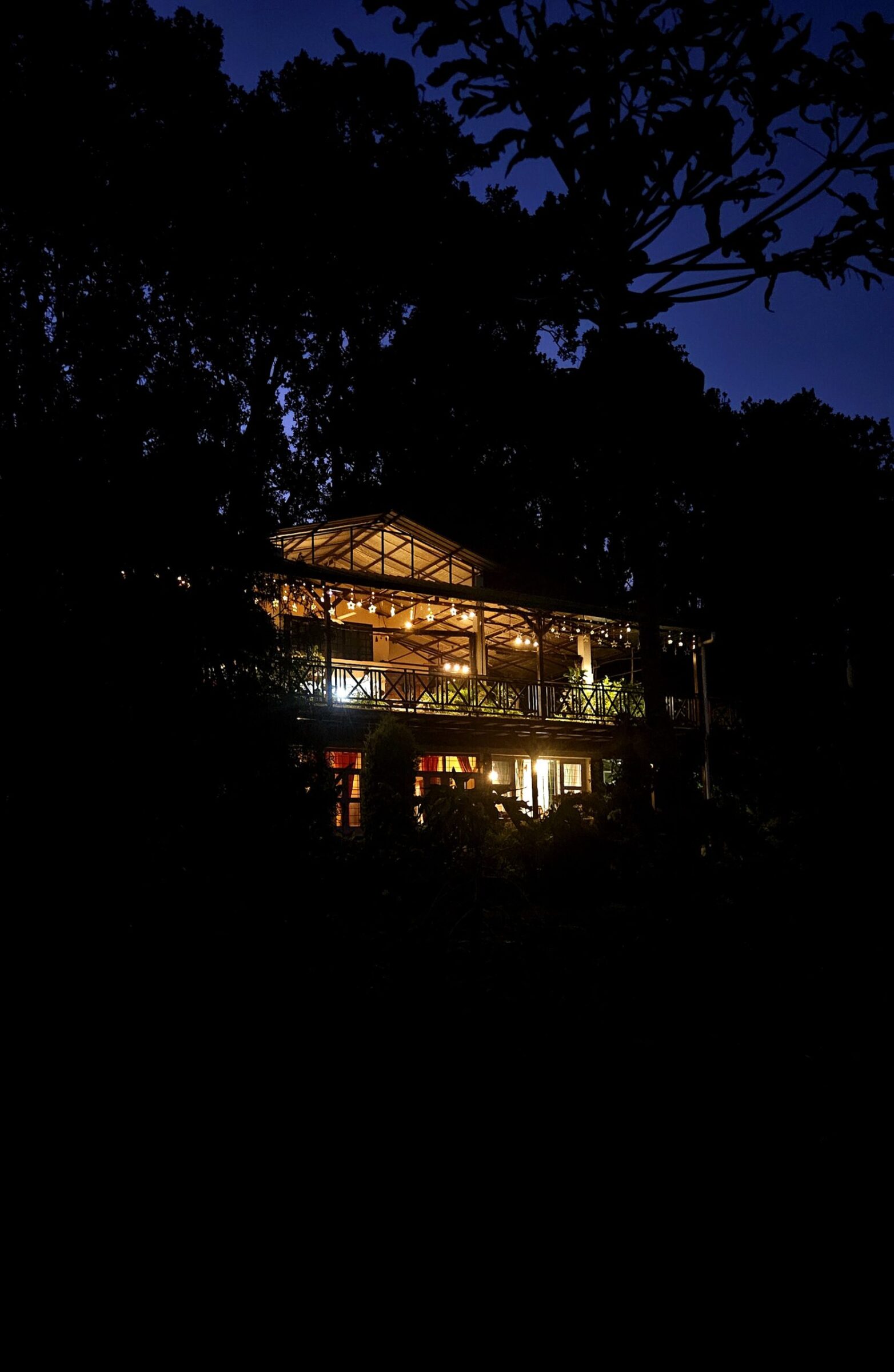
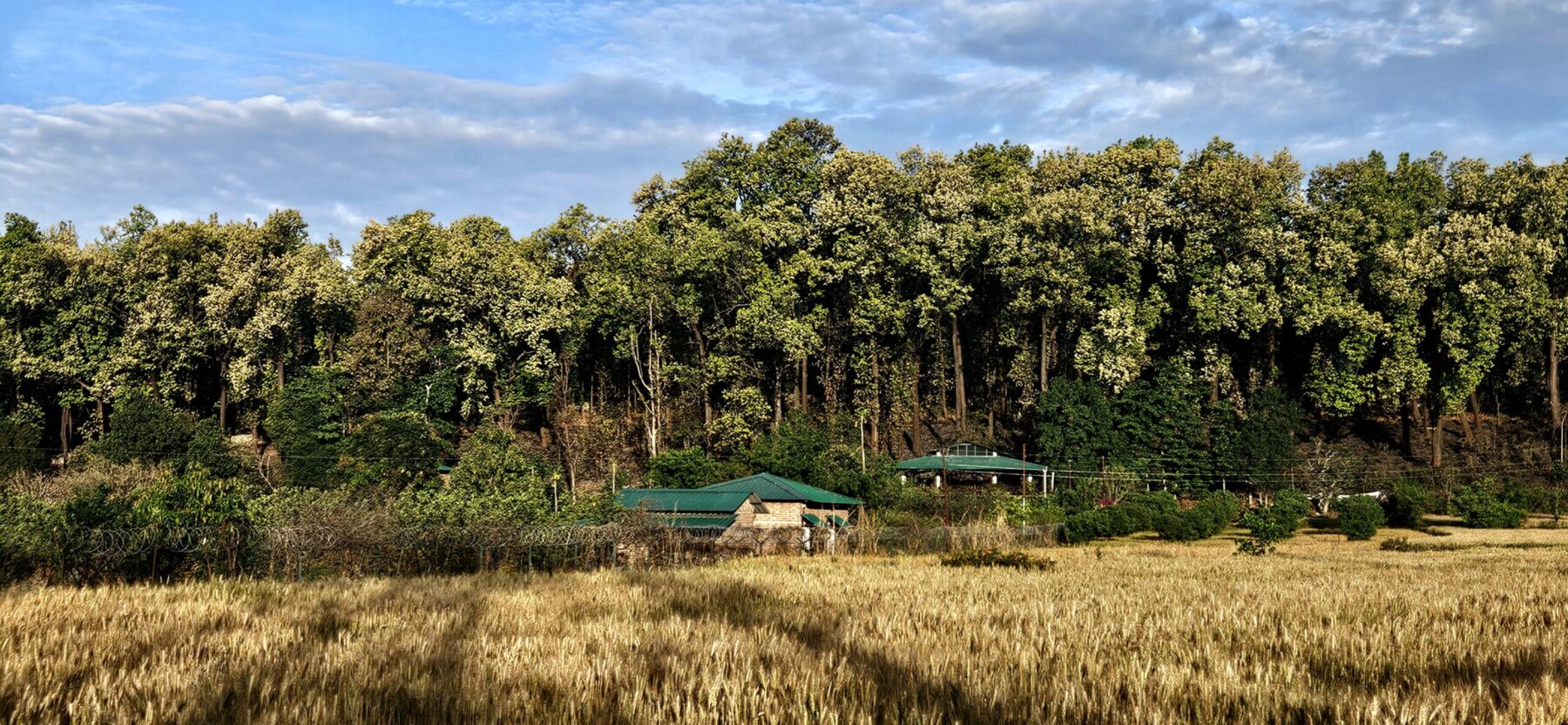
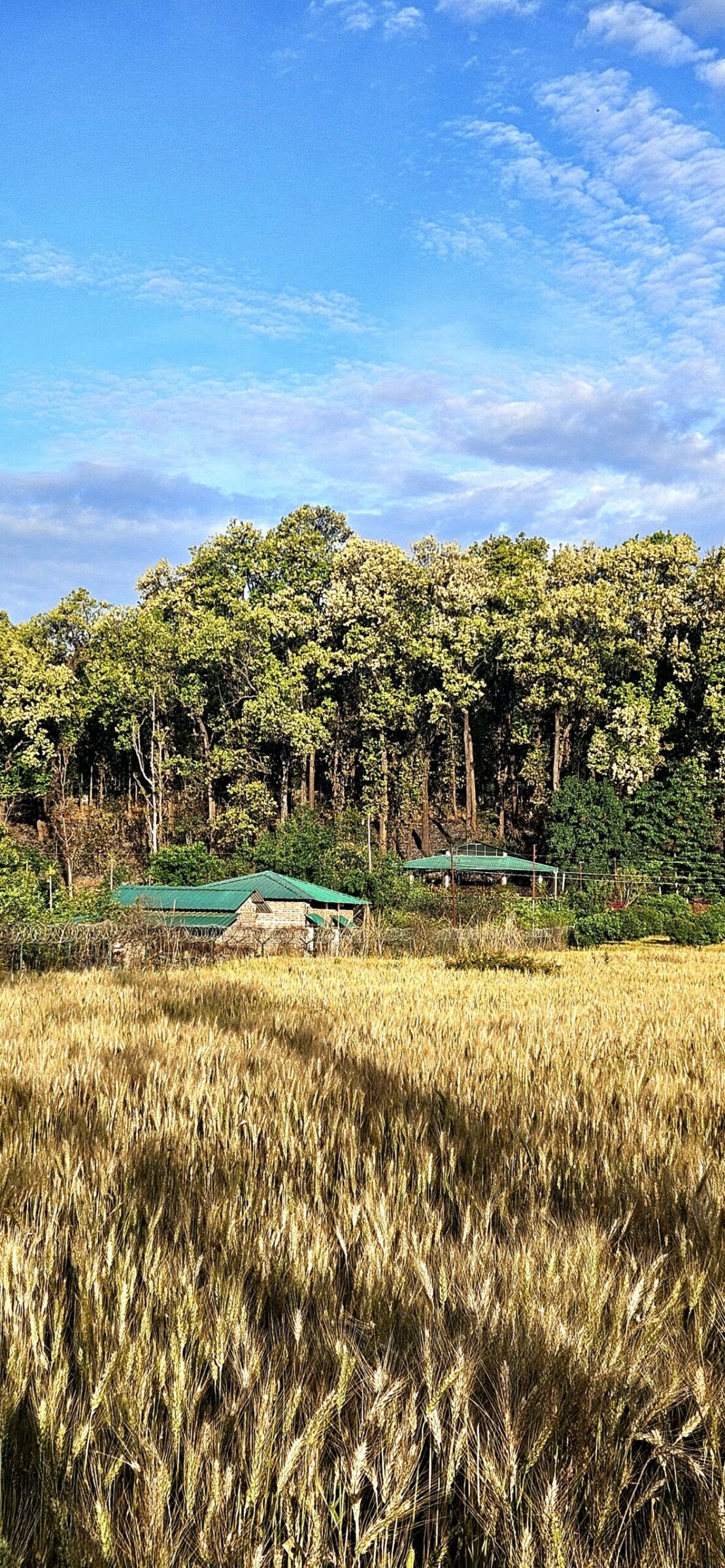
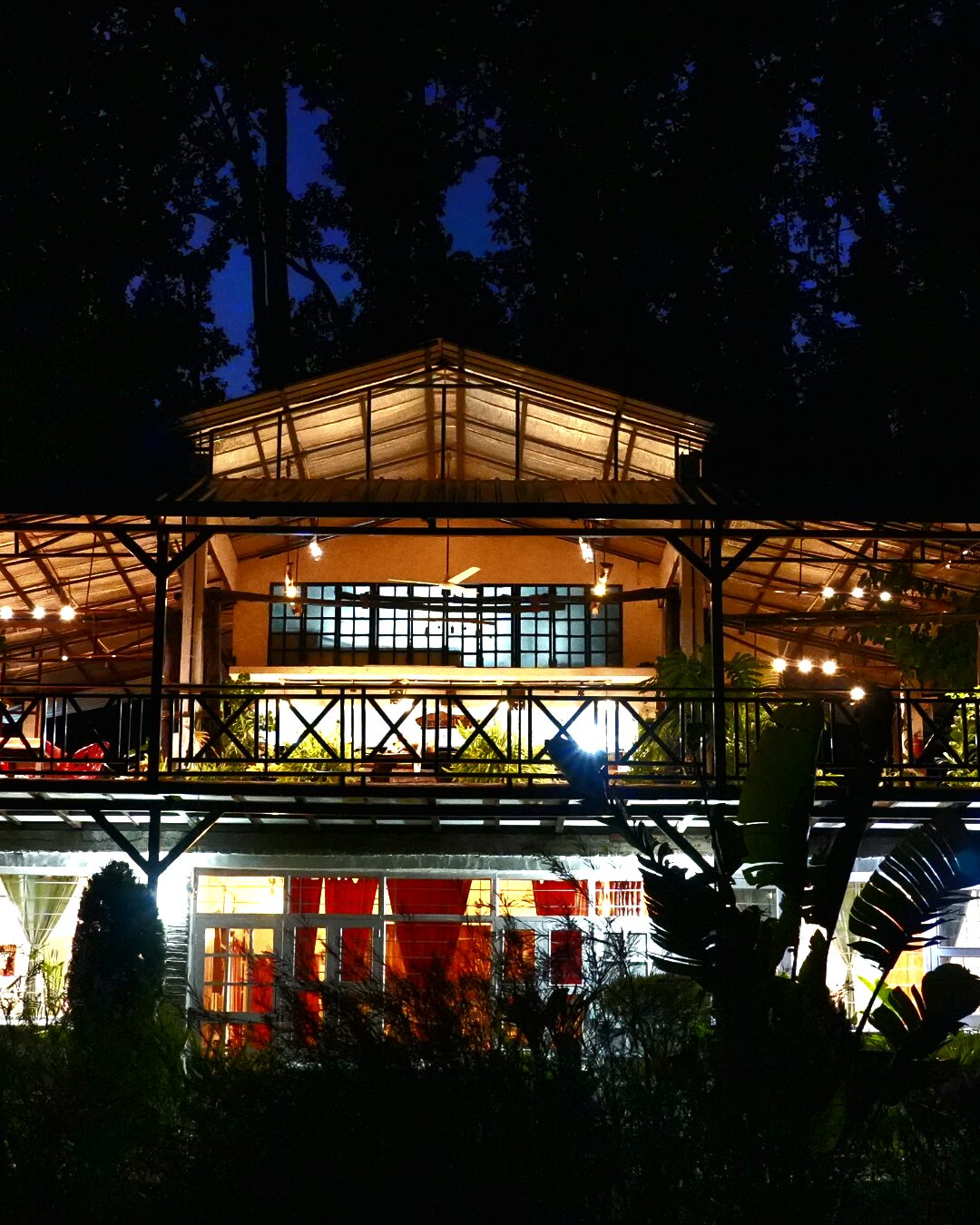
We are a farm stay located in 2.5 acres of food forest. A suite with 2 bedrooms and living room, and an independent cottage make it an exclusive space for maximum 6 guests at any time. We have a large land space, despite that we have built a limited hosting space because
* We wish to remain farmer first.
* We feel more than 6 people become a crowd and we wish to enjoy hosting our guests .
* You see green forested mountains from all the rooms.
* Being in the farm you are always surrounded by trees and greenery. All around us are the farm lands. We are 12 feet away from the forest.
* The full moon nights are mesmerising.
* We are selective about our guests.
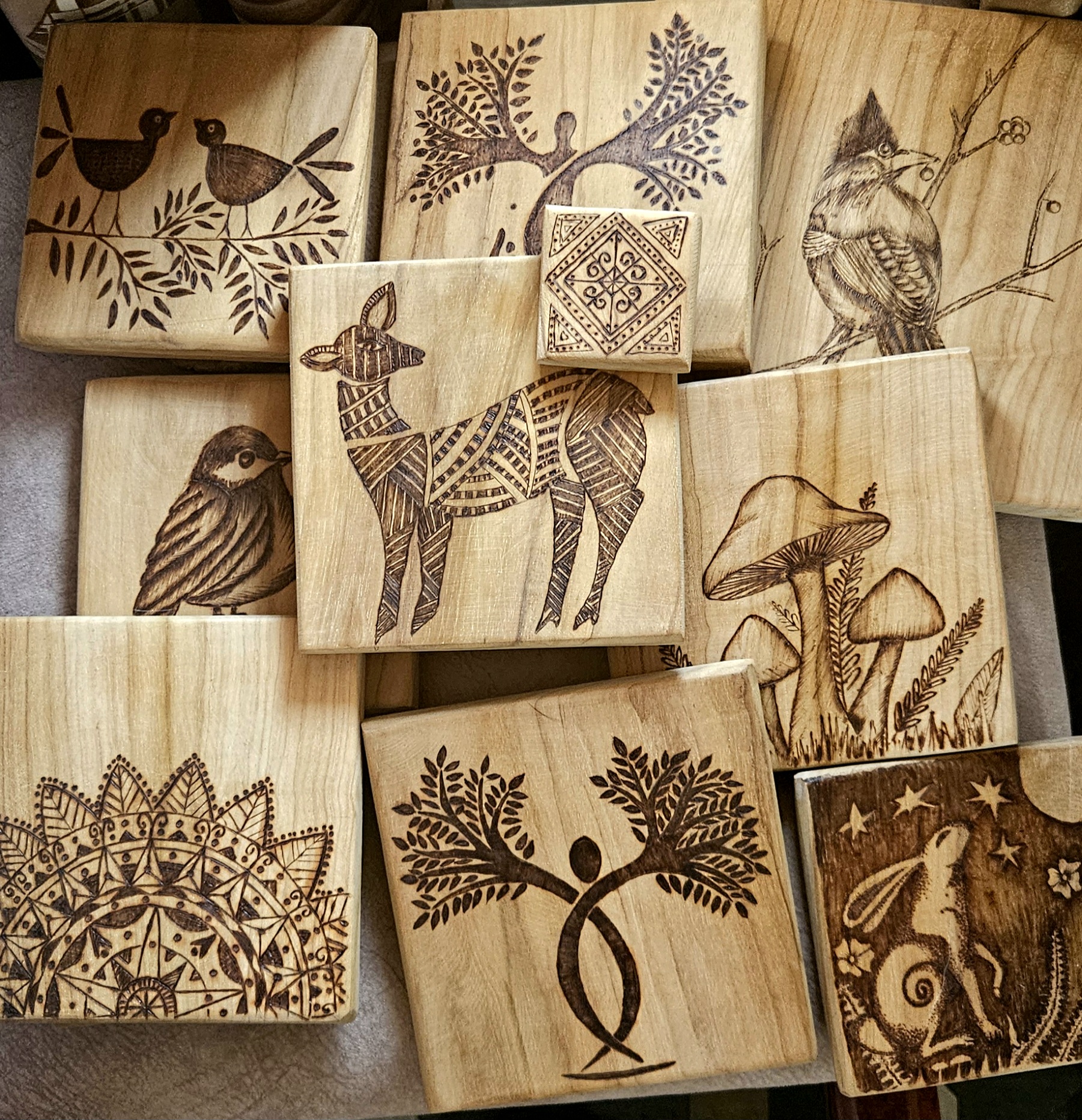
Since we are a farm stay, the walls and the decor is rough-hewn, personal artefacts adorn the walls to give it a personal home touch. The rooms have affirmations inscribed on wood pieces using pyrography. The concept is to align the mood of the guests in line with the slow life philosophy of our farm through appropriate affirmations. We have designed the rooms small with no TV. We want our guests to expose themselves to nature, rather than tied down indoors in their rooms.
I live in the farm. Therefore, guests get to interact with me over breakfast or dinner. There are lots of stories of building the farm, switching from corporate life to become farmer, wild animal interactions are shared. This is in total contradiction to many farmhouse accommodations which are run remotely by the owner in a metro city and caretakers run the place. If you read the reviews online, you can find guest mentions of our food and my presence as the highlights.
- Usually mosthome staysoffer basic dal-chawal-roti-sabzi as meals. We differentiate ourselves from any other homestay or farm stay by having many items in our menu.
We are known for:
* Kumaoni lunch,
* Ras .. which is mix of 5 whole dals, all grown in our own farm, cooked in slow heat for 5 hours in cast iron pot
* Pahadi Style Kadhi
* Dry Vegetables
* Pahadi Style Raita
* Salad and chutneys
* Mutton Handi: 1 kg mutton is sourced locally of a jungle grazed goat, slow cooked in an earthen pot for 4-5 hours. The taste of jungle grazed goat meat is very different from what we get in the market.
* Wood fired pizza: We make our own pizza dough and pizza sauce. The dough preparation takes almost 36 hours using starter. We do not use any extra gluten or bread enhancers. The pizza sauce is made with blanched tomatoes. The pizza has smokey flavour and it is very fluffy.
* Wood fired oven Pita Bread: The Pita bread is thin and fluffs unlike the one done on tawa. Hummus is made using white chick peas grown in our own farm.
* Sizzlers: What makes our sizzlers unique is our custom sauce, in which the primary ingredient is the honey that we produce in our own farm.
* Breads: Since 2018 we have not purchased breads from outside. We bake our own breads, including ciabatta, focaccia, rolls and buns for our guests.
* Our hot beverages are always served along with a piece of home-baked tea cake.
* All our food is cooked with either spices grown within farm or whole spices that are purchased from market and freshly ground to be used for cooking. We never use any pre mixes or any other food enhancers.
* We always cook our food fresh for every serving to guests. We never use ready mixes or prepare gravy in advance to quickly mix and serve the food. That is why we are always loved for our authentic taste. Therefore, we want our guests to always pre order their food.
Natural/diversified farming model for small/marginal farmers
There are always many factors which impact the farm revenue. For large farms sustainability comes much easily because of economies of scale. Large farmers grow specific type of crops primarily Sugarcane, Wheat and Paddy. They control the environment by using water, fertilisers, pesticides, weedicides and supplements. Since the scale is huge they use large machineries for entire farm operations. They sell their produce to large buyers like sugar mills or other mills or the government on MSP and sufficient revenue is generated year on year. However, in India most of us are small and marginal farmers. We do not have that scale. We are more affected by weather, animal intrusions and since the operations are small we cannot command a price too, not even MSP.
Therefore, for me a vdiversified operations really works. We have horticulture, dals and cereals, apiary, spices, herbs, vegetables and farmstay as a very diversified model. At all times something or the other is generating income for us and making the entire operation sustainable.
Impact on village ecosystem
Villagers resent the building of a hotel or resort which results in overcrowding, loud music, destruction of natural resources, disregarding local traditions, and price rises.
We believe that a farmstay is part of an ecosystem which seamlessly integrates with our village ecosystem. Our neighbours are part of our farm team. So we give employment and atleast four families are actively generating their household income from our farmstay. We purchase milk, crops or vegetables from our neighbours improving their income and thus quality of life.
At times our guests and their children like to interact our next door neighbours understanding their way of life.
Promotions
A property like Forest Side Farm depends mainly on OTAs like MMT and Airbnb, referrals and self-promotion.
The government must focus on infrastructure for the growth of tourism. With rampant problems of Pollution, waste disposal, poor quality roads, bad traffic situation, power outages good quality tourists prefer going abroad rather than choosing local options.
Future aspirations
* We are working towards inculcating appreciation and mindfulness for the nature, agriculture, slow life, peaceful neighbourhood and fellow human beings.
* We wish to be identified as be a well-known homestay in Uttarakhand. Anyone traveling to Uttarakhand, must know that there is a place called forest side farm, which is the best homestay/farmstay option.
* We wish to make Forest Side Farm the most desirable vacation place for those who love nature and seeking to rejuvenate/reboot their life for major shift in their lives.
* I am a self-taught baker, pyrography artist, wood carver. I would like to add workshops and experiences for our guests soon.
ABOUT THE AUTHOR
HEMANSHUJOSHI
Forest Side Farm,
Kushanawad, Village Patalia,
Kotabagh, UttarakhandIndia
Mobile – 0091 7310 690604 OR 72478780000