
Nawal Nasrallah
Nawal Nasrallah is an award-winning food writer, food historian, English literature
scholar, and translator from Arabic into English.
While Iraq inevitably shares many similarities with the rest of the west Asian culinary
traditions on account of the similarities of the basic ingredients available in the region,
such as rice, lamb, wheat, beans like chickpeas and lentils and many more, it is indeed
unique among them in the varieties it offers that developed there. It is a cuisine that was
shaped by the land’s rich history going all the way back to the Sumerian and Akkadian
times, where the first documented culinary recipes were written on clay cuneiform
tablets (today kept at the Babylonian Collection of the Museum of Yale University).
For one thing, and irrespective of differences in ethnicity or religion, or even social
status, the Iraqi daily staple revolves around the dishes of rice and stew, in Iraqi timman
wa marga. White rice is usually served with a tomato-based stew cooked with chunks of
lamb on the bone and a seasonal vegetable, one day it would be okra – the most
popular of all – and another day, it would be spinach, or white beans, or eggplant, or
zucchini, and so on. Therefore, it is never boring as it might sound at first. Another thing
typically Iraqi, is having pickles with such meals, especially pickled mango, called
‘amba. It is usually imported from India, and I have not seen any other people fonder of
‘amba than Iraqis, perhaps not even the Indians themselves who manufacture it for
them. One reason could be that these daily staples are usually spiced sparingly.
True, like the cooking in the rest of west Asian region, the elaborate stuffed dishes like
dolma and kibbe (or kubba as Iraqis call it) are favored. The Iraqi cuisine, nonetheless,
offers many more varieties that characterize its cooking, such as the Iraqi dolma
prepared with many vegetables, unlike the rest where it usually one type of vegetables
is used. Or take the stuffed bulgur kibbe, where in Iraqi it is distinctly shaped into flat
discs, impressively large and thin. Other grains are used in making other varieties of it,
such as the delicate kubbat timman, also called Halab, which is dough made with boiled
rice and shaped into meat-filled discs and fried. Also particular to the Iraqi cuisine are
the beloved stuffed rice dough dumplings simmered in cream of turnip and swiss chard
soup, Kubbat ḥāmuḍ shalgham.
Using the New World vegetable, potatoes to make the stuffed food of kibbe is unique to
the Iraqi cuisine, called poteta chap, not sure of the origin of the name but it sounds
more like Hindi to me, my guess is that the name was developed when Indian soldiers
were still in Iraq during the First World War.
Another Iraqi specialty, particularly in Baghdad, is the masgūf fish dish, not found
anywhere else, and for the preparing of which there is archeological evidence of its log
history in the region. Whole river fishes, typically of the carp family, shabūṭ and bunnī,
are slit-open from the back and hung on two sticks and barbecued on camp-like fire
along the banks of the river Tigris.
All these dishes, even those with rice, come accompanied with the characteristic breads
of Iraq, namely, khubuz tannūr, which is flat bread baked in the clay oven, as well as the
ubiquitous diamond-shaped ṣammūn, baked in the brick ovens of the commercial
bakeries.
Various varieties of vegetables and beans were valued and relished as delicious side
dishes, they were offered, as we say today as appetizers, served with bread.
Ḥimmaṣ Kassa (mashed boiled chickpeas with tahini):
This is an intriguing condiment included in the 14 th century Egyptian cookbook Kanz al-
Fawāʾid (I translated the book into English, Treasure Trove of Benefits and Variety at
the Table), because it is the ancestor of today’s ubiquitous hummus bi tahini (chickpeas
mashed with tahini paste):
(Makes 4 servings):
1 cup boiled chickpeas
2 tablespoons tahini, stirred with water and wine vinegar, 2 tablespoons of each
¼ cup finely ground walnut, stirred with 2 tablespoons lemon juice, and 1 teaspoon wine
vinegar
½ cup chopped parsley
¼ cup chopped mint
3 tablespoons olive oil
¼ teaspoon of each of caraway, coriander, black pepper, ginger, and cinnamon, all
crushed
½ teaspoon salt
A quarter of a salted lemon, cut into small pieces
For garnish: olive oil, chopped pistachio, chopped parsley, cinnamon, and rose petals
(optional)
…………………………………
1. Put all the ingredients, except for the salted lemon, in a food processor, and pulse the
mix until it looks smooth. The mix should look green. Add more of the herbs if needed.
The consistency of the mix should be thick enough to pick up with a piece of bread. Add
a bit more lemon juice if needed.
2. Fold in the chopped salted lemon, and use. To serve a dish, spread the condiment on
a plate, drizzle a generous amount of olive oil all over its face, garnish it with chopped
parsley, and give it a light sprinkle of cinnamon and crushed rose petals if used.
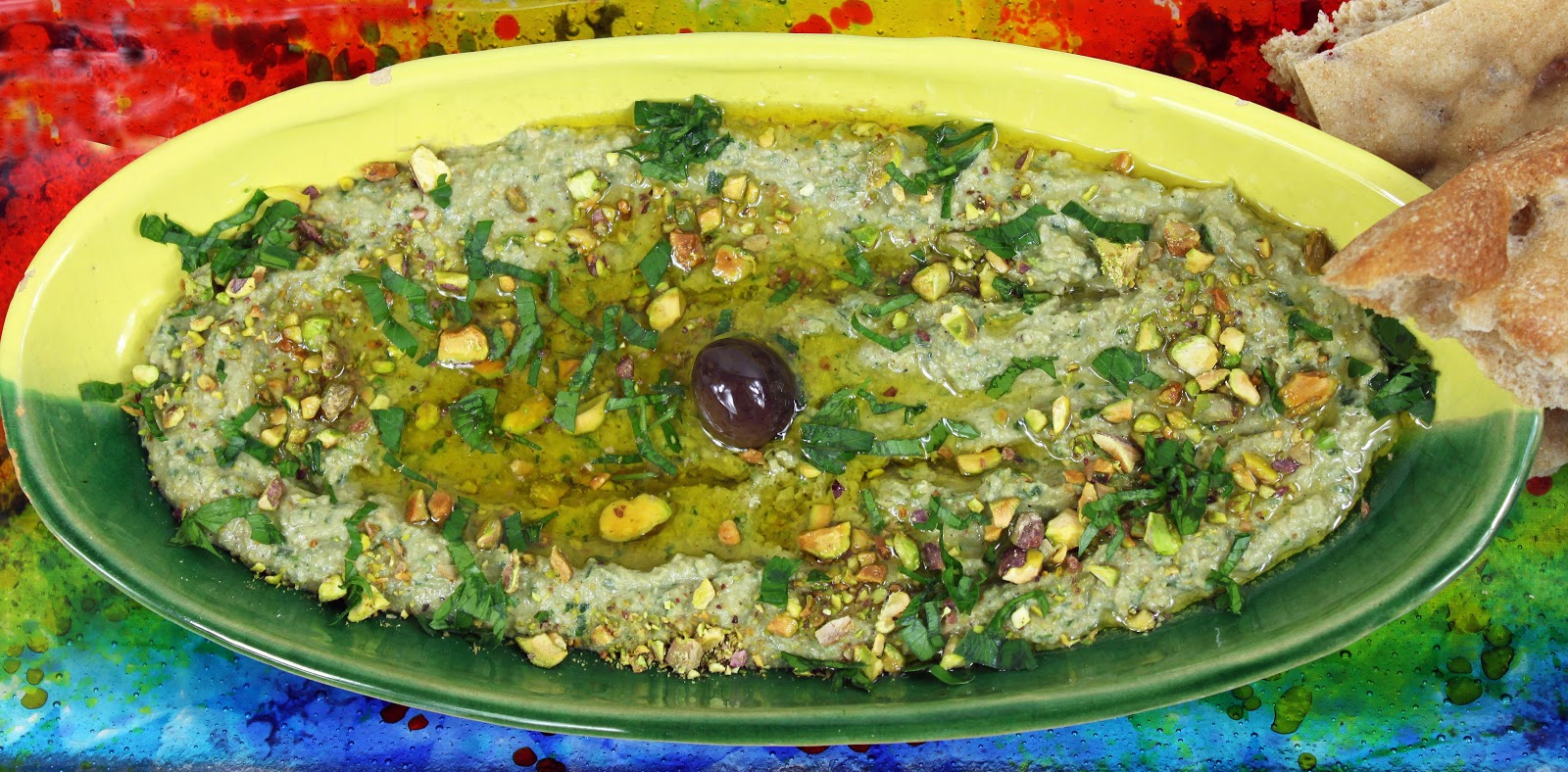
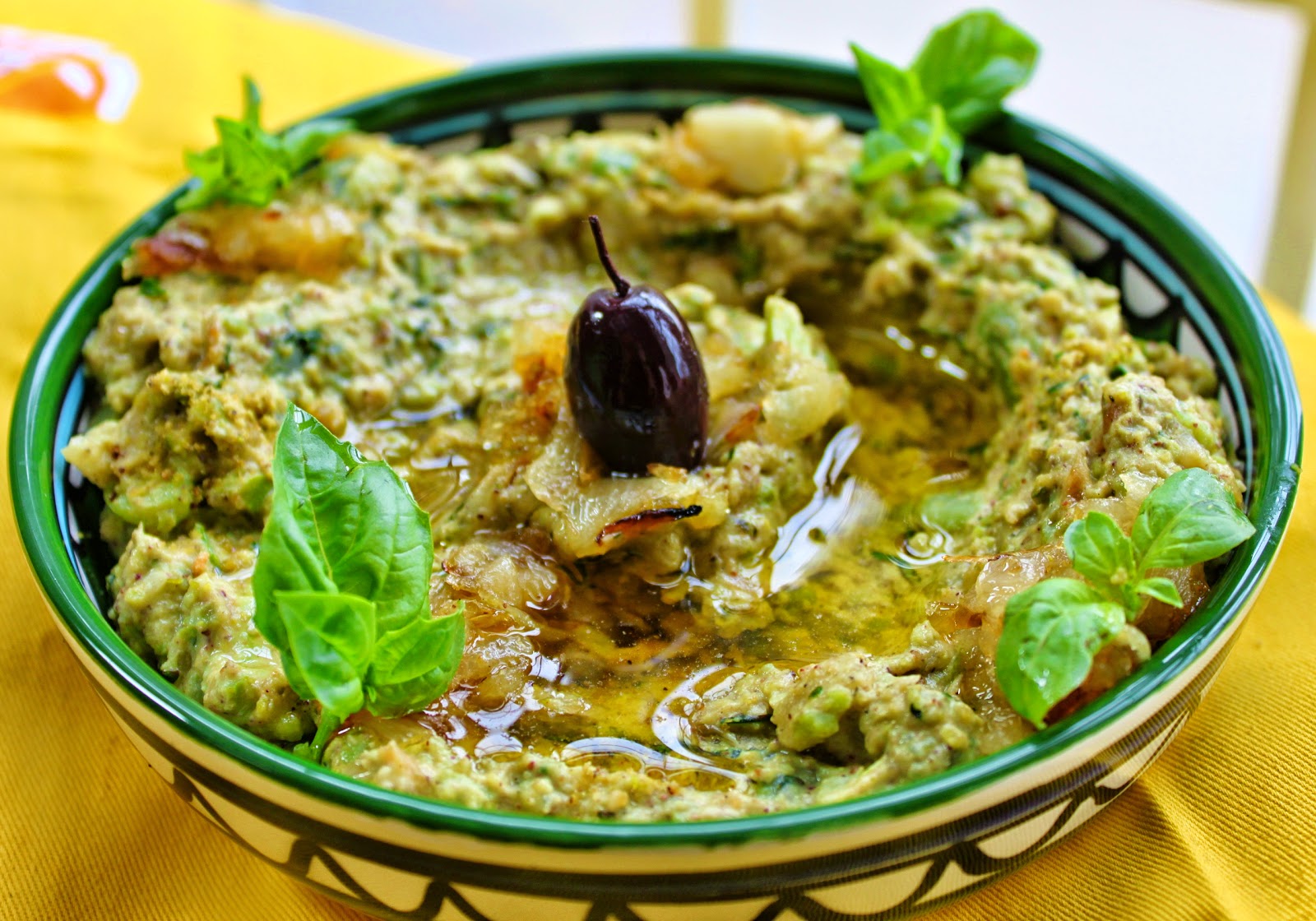
Bāqillā Khaḍrāʾ Mahrūsa (Pureed fresh fava-bean dip):
This is the other vegetarian dish I chose as I found it in the 10 th c. Baghdadi cookbook
Kitāb al-Ṭabīkh (I translated into English as Annals of the Caliphs’ Kichens).
Makes 4 servings
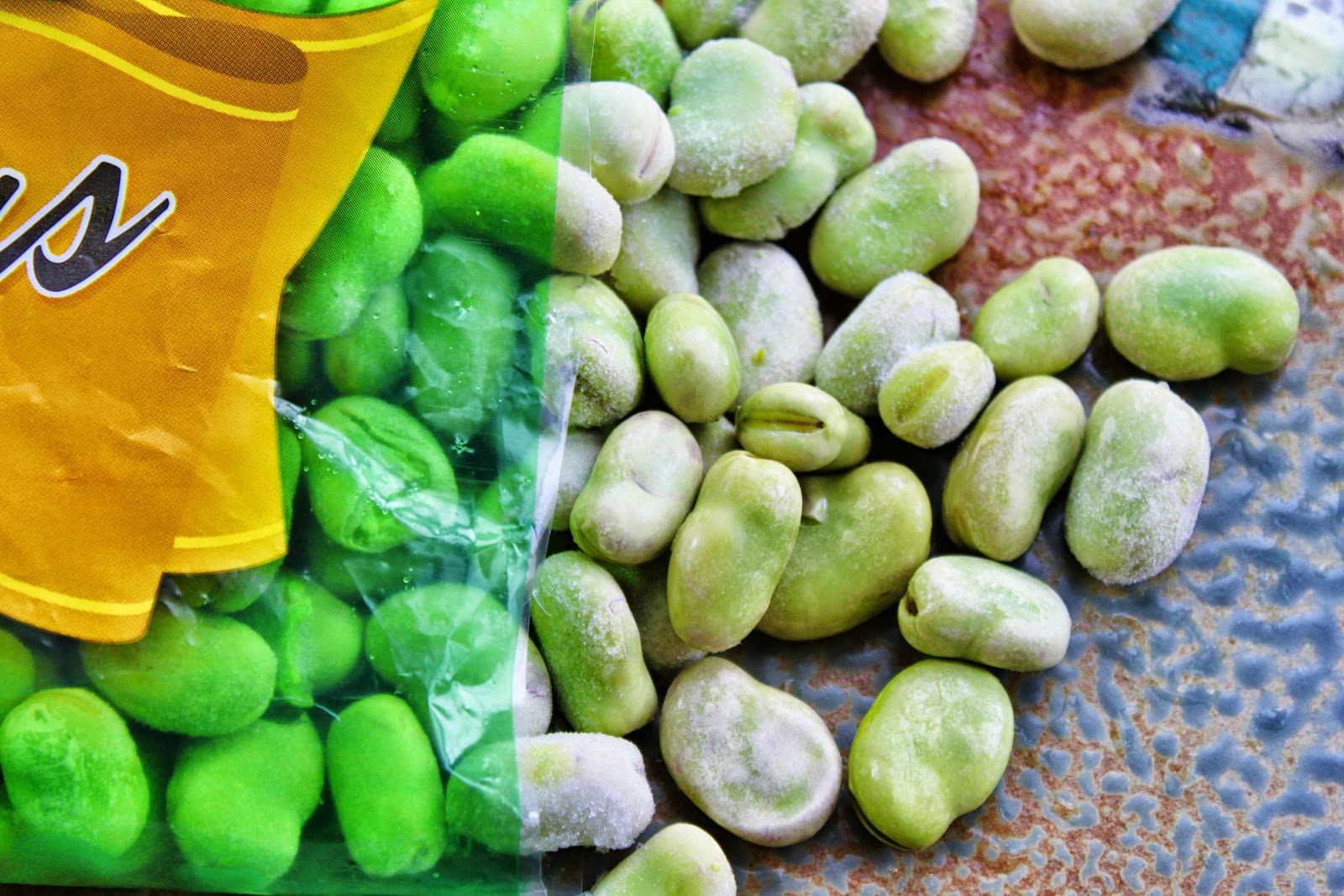
You can prepare this dip year round using frozen green fava beans. If using fresh fava
beans, blanching them in hot water first will make shelling them a breeze.
2 cups (12 oz) skinned fresh or frozen fava beans (= 1 pound or 3 cups, with skin still
on)
3 tablespoons olive oil
1 medium onion, finely chopped
½ teaspoon crushed coriander seeds
½ cup, finely chopped cilantro
2 garlic cloves, grated
½ teaspoon salt
¼ teaspoon black pepper
1 teaspoon ground cumin
¼ cup lemon juice
½ cup (2 oz) ground pistachios
For garnish: olive oil, olives, and basil or parsley
1. Put the skinned fava beans in a medium pot and cover with cold water. Bring to a
boil, then lower heat to medium, and let them boil gently for about 15 minutes, or until
tender. Drain beans and reserve some of the liquid, in case you need it. When beans
are cool enough to handle, mash them with a fork.
2. Sauté the onion in oil until it starts to brown. Add coriander and cilantro and stir
briefly. Set aside 2 tablespoons of it for garnish, add the rest to the mashed beans along
with garlic, salt, pepper, cumin, lemon juice, and ground pistachios. If mixture looks dry,
add a little of the drained liquid in which beans were cooked or some extra lemon juice,
to taste.
3. Spread mixture in a shallow bowl, and garnish with the browned onion, olive oil,
olives, and basil or parsley. Serve with warm bread.
The Iraqi halwa Dihiniyya:
Here is a typically Iraqi halwa, ancient in its conception. It is called dihiniyya, derived
from the name of the clarified butter, ghee (dihin ḥurr) traditionally used in making it,
which gives it its characteristic enticing aroma.
Here is how to make it (Makes about 15 generous squares):
1 cup milk
1 cup fat (I use 1/2 cup butter and 1/2 cup canola oil)
2 cups sugar
2 tablespoons date syrup (may be substituted with honey)
2 cups all-purpose flour
1 teaspoon ground cardamom
1½ cups unsweetened shredded coconut
1 cup walnut halves
Preheat oven to 340 degrees F.
1. Put milk, fat, sugar and date syrup (or honey) in a small heavy pot. Stir and let the
mix boil until bubbly, over medium heat (about 10 minutes). Then take the pot away
from heat and right away start adding flour, gradually, using electric mixer, like you do
with cakes. Mix in cardamom.
2. Grease a 12x7x2-inch pan (or approximate size) and spread the bottom with half of
the coconut. Scatter the walnut halves all over it. Then, pour the batter, and cover its
surface with the rest of the coconut.
3. Put the pan on the middle shelf, drape it loosely with a piece of aluminum foil, and let
it bake slowly for 40 to 45 minutes.
4. Take it out of the oven and let it cool completely on a cooling rack. Cut it into 15
squares and serve. Store the leftovers in a plastic container and keep it in the
refrigerator, where it will stay good to eat for several weeks (if you can resist the
temptation).
Enjoy!
ABOUT THE AUTHOR
Iraqi author, Nawal Nasrallah is an award-winning food writer, food historian, English
literature scholar, and translator from Arabic into English.She is best known for her
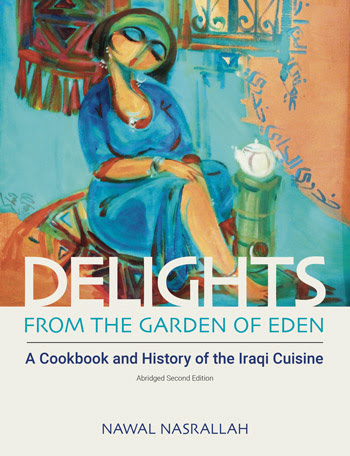
cookbook featuring Iraqi cuisines, entitled Delights from the Garden of Eden, and for
editions of medieval Arabic cookbooks. Her books based on medieval Arabic cookbooks
include Annals of the Caliphs’ Kitchens, an annotated translation of the tenth-century
Abbasid-era cookbook Kitab al-Tabikh by Ibn Sayyar al-Warraq. In Smorgasbords of
Andalusi and Mahgribi Dishes, Arab food historian Nawal Nasrallah revives Anwa al-
saydala, a chaotic, anonymously compiled cookbook from around 1220 CE. Anil
Mulchandani interviewed her about her work.