Preserving India’s Culinary Heritage: The Indian Community Cookbook Project
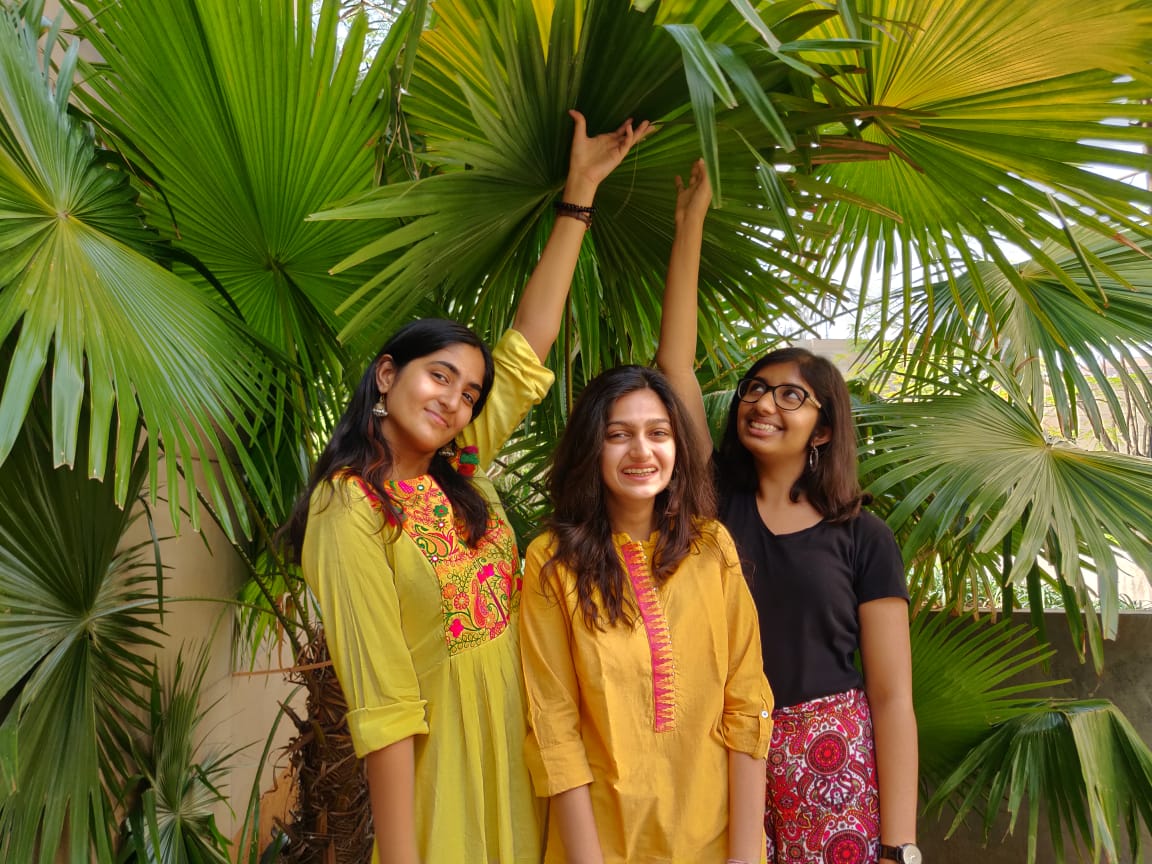
By Ananya Pujary, Muskaan Pal and Khushi Gupta
The Indian Community Cookbook Project began as a Digital Humanities assignment by three students at FLAME University. Today, it brings together cookbooks, handwritten recipes, oral traditions and food memories to preserve the diversity of India’s community cuisines. The founders share how the project evolved.
How the Project Began
The project started with the idea of documenting Ananya’s community cuisine—Mangalorean—because many of its traditional recipes are passed down orally through generations rather than documented in published cookbooks.
As we researched further, we realised that many cuisines within India have been underrepresented because they have not been documented in traditional ways. When our website went public and began receiving attention from academic and general audiences, we understood that there was a shared interest in preserving India’s culinary history.
Communities as the Foundation for Research
We realised quite early that broad labels such as “Indian cuisine”, or even the cuisine of a particular state, can flatten a lot of diversity. A state may become known for a handful of dishes, while different communities within it have their own ingredients, techniques, traditions and food memories.
Looking at food through communities allows us to capture some of that specificity rather than treating an entire region as one cuisine.
Discoveries Beyond Recipes
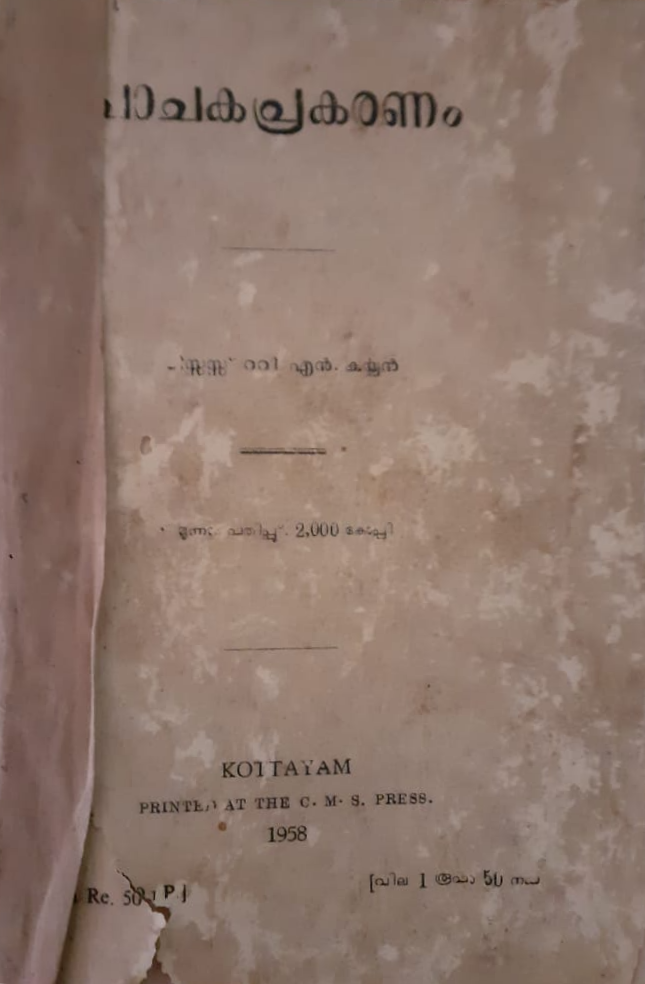
One of the most interesting discoveries was seeing how much older cookbooks reveal beyond recipes. They preserve measurements, utensils, cooking techniques and words that are no longer commonly used. For instance, Pachakaprakaranam by Mrs T. N. Kurien uses measurements such as dram, seer and thudam.
We also found handwritten family collections and books in regional languages that captured food knowledge which may never have entered mainstream publishing. It made us realise how much culinary history can sit quietly inside old books and family collections.
The Role of Cookbooks
In a subcontinent predominantly shaped by oral tradition, cookbooks are a form of preservation, as are recipes shared through online media. Cookbooks may offer a more holistic representation of a community’s food and practices, whereas an online recipe can stand on its own as part of a larger whole.
A cookbook can also reflect a community’s visibility, representation, migration and settlement patterns, and affluence—connections that become particularly salient when looking at the pre-internet era.
It is difficult to say how much culinary knowledge remains oral, but given the diversity within individual states and communities, a great deal is undoubtedly still undocumented. Much food knowledge is passed down informally: by standing in the kitchen and watching someone cook, through a phone call asking how something was made, or through instructions such as “add this much”.
Some families are also protective of recipes considered family heirlooms, so that knowledge may remain within the family for generations.
The Cultures Behind the Recipes
A recipe is rarely just a list of ingredients. It can be connected to a particular person, festival, season, family occasion or way of cooking together. When a recipe disappears, some of that context can disappear with it.
This is why we are interested not only in recipes but also in food memories, handwritten notes, oral histories and the stories surrounding them.
How Migration, Urbanisation and Globalisation Shape Food
Processes such as migration, urbanisation and globalisation directly influence the food we eat. Migration can change the ingredients people have access to. Globalisation makes ingredients, dishes and cooking technologies from around the world more available. Urbanisation can encourage fusion cuisines while also risking the underrepresentation of dishes from particular areas.
In today’s highly connected world, cuisines have changed in some way, whether through the ingredients or technologies used. Commercialisation has also led to a vast and diverse culinary landscape becoming associated worldwide with a small selection of dishes, such as butter chicken and mango lassi.
Our project aims to explore these processes and provide a more holistic view of India’s regional and community cuisines.
Timelines and Archives
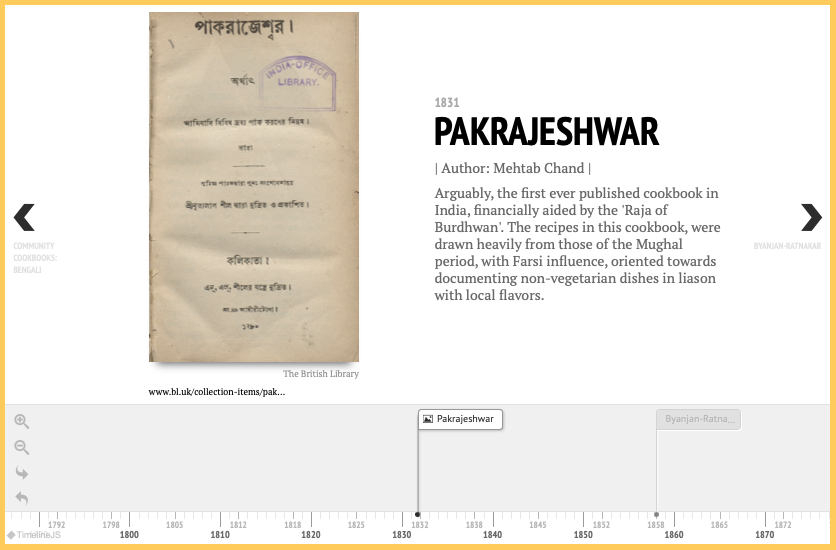
Our Timelines section chronologically orders cookbooks associated with particular cuisines to trace changes in flavours, ingredients and tools. It currently includes:
- Anglo-Indian
- Bengali
- Goan
- Kerala
- Maharashtrian
- Parsi
- Rajasthani
- Tamil
Our Archives section includes handwritten recipe books, recipes and oral traditions from communities such as Gowd Saraswat, Arya Vysya, Khoja, Bohri-Alvi, Mangalorean and Naga, among others.
Changes Across the Decades
We have noticed many changes over the decades, including developments in cooking technologies, access to ingredients, the rise of fusion foods and the influence of community migration. We have also encountered different ways of preparing the same dish across communities.
At the same time, there is a desire to protect traditional recipes and keep them alive through oral discussion, cookbooks and other forms of documentation.
Our project recognises that publishing is a space to which relatively few people have access, and that there are many ways to document a cuisine. We have created room to explore these approaches through our Archives and Food Memories sections.
We hope our website can serve as an outlet for lesser-known community recipes to be shared with the world. Social media allows people to share their culinary histories with global audiences in their own words, which is why we use these platforms to expand our archive.
From Heritage to Livelihood
Initiatives such as Himalaya2home and the Santhali recipe project offer examples of how recipe documentation can support communities.
Culinary tourism can increase the visibility of underrepresented communities. Other opportunities include cookbooks, cooking shows and the retail of local ingredients, including those associated with a particular place through geographical indication (GI) tagging.
Supporting women as custodians of culinary heritage can also benefit communities, with self-help groups organising to create packaged products from traditional recipes. Avenues beyond cookbooks, such as documentaries about a community’s food practices, can offer further opportunities.
However, this requires a concerted effort involving government institutions, the tourism industry and community members themselves.
The Impact of Digital Media
Greater Accessibility and Exposure
Digital media offers global accessibility and exposure, breaking down traditional barriers such as the resources needed to publish a cookbook. It allows marginalised, hyperlocal cuisines to be documented in ways that might not have been possible through conventional publishing.
Challenges of Context and Authenticity
As food cultures become more globally connected, the boundaries between traditional recipes and experimental or trend-driven versions are becoming less distinct. While experimentation is not inherently negative, more accessible or fashionable adaptations can sometimes displace traditional versions.
Digital media can also turn food into content for quick consumption, whereas physical books often retain accompanying context, notes and stories.
The Future of the Indian Community Cookbook Project
We are exploring ways to make ICCP more community-led by allowing contributors to add their own recipes, food memories and related material directly to the archive.
Our current submission model has helped us build a collection that is personal and rooted in individual stories. We would like to build on this with a more contributor-driven system, making it easier for the archive to grow while preserving the original voice and context of each contribution.
We are also exploring how AI tools can help us build a more comprehensive archive of Indian cookbooks published after 1900. Through our Modern Cookbook Story section, we hope to map these cookbooks across the Indian subcontinent and better understand which regions are well represented in published food histories and which remain missing or underrepresented.
These findings can help guide our future archival efforts. Ultimately, we want ICCP to continue growing as an archive that brings together published culinary history and the personal food knowledge that lives within families.
About the Authors
Ananya Pujary, Muskaan Pal and Khushi Gupta founded the Indian Community Cookbook Project in April 2019 while they were undergraduate students at FLAME University.
The platform was originally developed as a final assignment for an Introduction to Digital Humanities course. The trio expanded it into a public digital archive under the mentorship of Maya Dodd, a professor of literary and cultural studies at FLAME University whose work explores food cultures in digital spaces.