
COMFORT GOING GOURMET
Interview with Chef Nishant Choubey
By Sharmila Chand
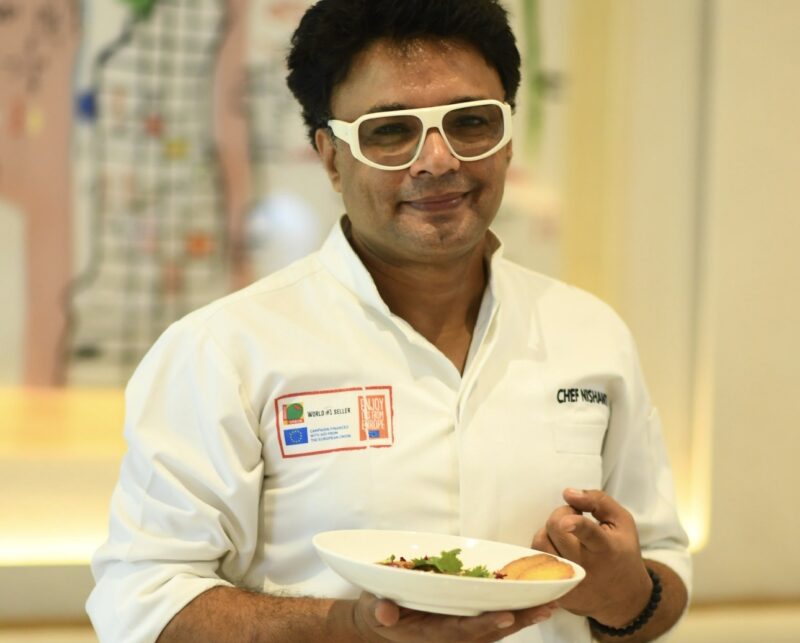
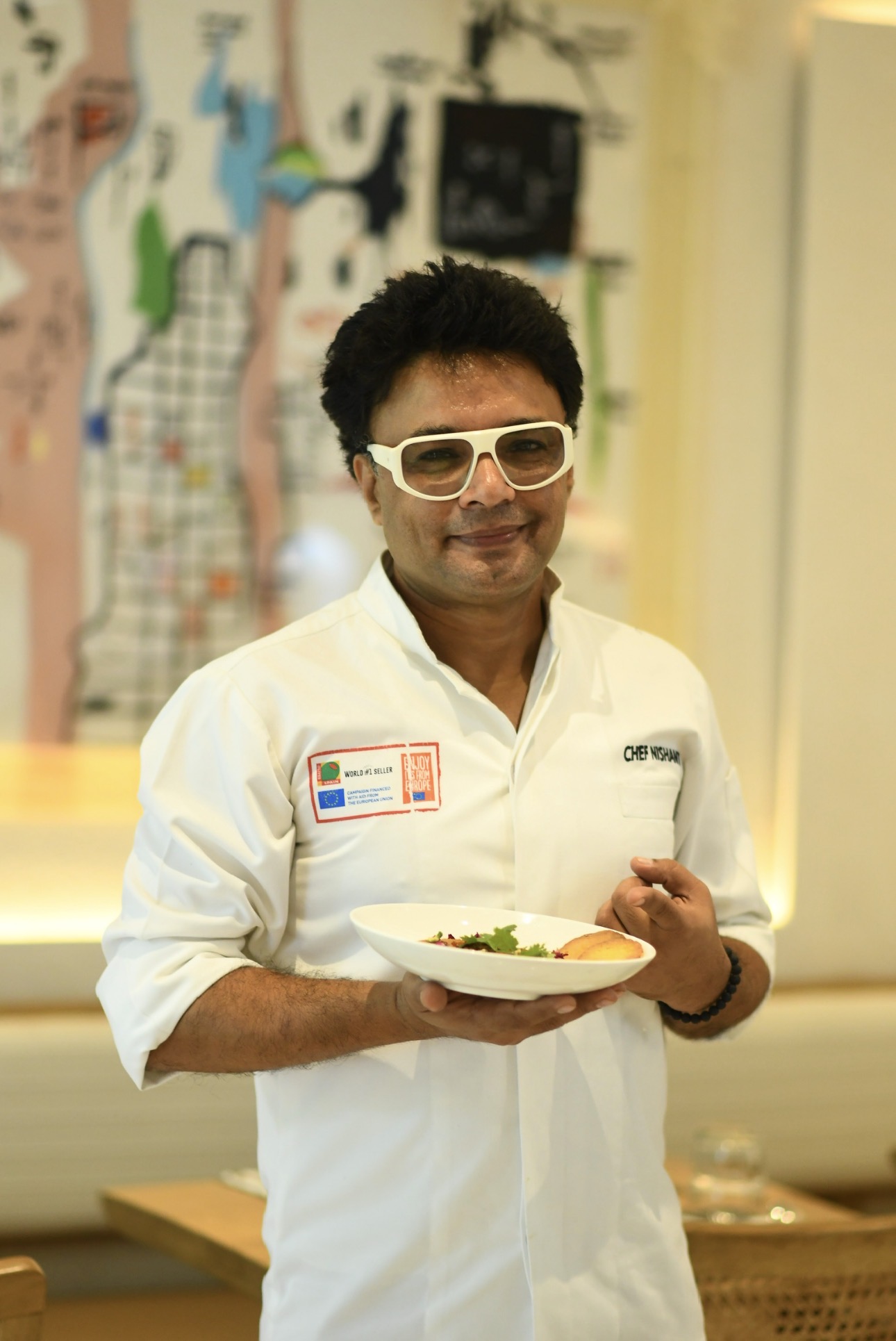
Chef Nishant Choubey is an award-winning independent chef, culinary consultant, author and mentor with over 25 years of experience across Indian, European and Asian cuisines.
Hailing from Jharkhand, he is passionate about celebrating India’s forgotten ingredients, indigenous produce and tribal culinary traditions, believing that every ingredient carries a story and every meal has the power to create memories.
His philosophy, “Comfort Going Gourmet,” reflects his commitment to transforming humble, regional ingredients into refined culinary experiences while preserving their authenticity.
Throughout his career, Chef Nishant has worked with some of the world’s leading hospitality brands, including The Oberoi Hotels & Resorts, Taj Hotels, Roseate Hotels, Olive Bar & Kitchen, Madinat Jumeirah Dubai, and has undertaken international consulting assignments in Bangkok, Malaysia, Australia and the United States.
As a culinary consultant, he has conceptualised and developed restaurants and dining experiences for RANI (New Jersey, USA), Organic Bistro & 1978, New Delhi, Street Storyss by Times Food, Indus (Bangkok), Tokyo Mithaiwala, Qube (Australia), Luma (Alibaug), and his recent hospitality project in Surat, besides collaborating with luxury hotels, hospitality groups, food festivals and destination dining projects across India and overseas.
Chef Nishant is the recipient of several prestigious honours and multiple national culinary excellence awards. He is also the author of Stay With Indus, a book that celebrates India’s diverse culinary heritage through thoughtfully curated recipes inspired by regional traditions.
Recognised for his progressive approach to Indian gastronomy, Chef Nishant seamlessly blends traditional wisdom with contemporary techniques, creating immersive and interactive dining experiences. His mission is to take India’s rich regional and tribal cuisines to the global stage while inspiring young chefs to cook with humility, curiosity, sustainability and purpose.
In an informal conversation, he tells us how he is often called ‘Chef With White Glasses’ and infact got his US VISA because of the stylish ones he wears. Also Akshay Kumar complimented him at Wheel of Fortune programme at Sony TV and wanted them for a day! And a lot more…..read on!
Interview
Sharmila: Firstly, tell us how do you define yourself as a chef?
Nishant: I define myself as a humble storyteller from Jharkhand. (BHARAT KA RAHNE WALA HUN AUR KHANE KE BAAT SUNATA HUN) .. Every plate I create is an opportunity to narrate a story about people, culture, forgotten traditions, sustainability, and memories. Food, to me, is not merely nourishment; it is an emotion that has the power to connect generations and cultures.
My work is deeply rooted in Indian traditions, yet I enjoy presenting them through progressive culinary techniques. Whether I am working with a humble millet (Gondli) from Jharkhand, Sea Buckthorn from the Himalayas, or a forgotten tribal herb, my endeavour is always to respect the ingredient and allow it to speak for itself.
I don’t cook to impress people. I cook to make them remember something, perhaps a grandmother’s recipe, a childhood memory, or a place they once visited. If my food can create that emotional connection, I consider my job accomplished.
Sharmila: What is your philosophy of cooking?
Nishant: My philosophy is “Comfort Going Gourmet.”
Luxury should never mean losing authenticity. I believe comfort food deserves the same respect as fine dining.
At the heart of my philosophy lies respect for farmers, artisans, ingredients, nature, and the environment. Sustainability is not a trend; it is a responsibility.
One initiative that I deeply admire is ‘Carma Packs’, which encourages replacing conventional plastic packaging with eco-friendly alternatives. We often overlook something as simple as a plastic straw served with a milkshake or cocktail, without realizing that it contributes to microplastic pollution and eventually finds its way back into our food chain.
As chefs, we influence thousands of dining experiences every year. Imagine the impact if every restaurant replaced plastic stirrers, straws, and disposable packaging with sustainable alternatives.
Similarly, I consciously work with seasonal produce, local sourcing, forgotten grains, and indigenous ingredients because reducing food miles also reduces our carbon footprint.
I truly believe that the future of gastronomy lies in creating food that nourishes both people and the planet.
Sharmila: Had you not been a chef, what would you have been?
Nishant: Interestingly, becoming a chef was never part of my original plan.
Like many Indian students, I aspired to become either an engineer or an IAS officer. However, destiny had a different blueprint.
Had I not become a chef, I would probably have been leading an entrepreneurial venture focused on developing meaningful products that improve people’s lives.
Innovation has always fascinated me.
Whether through food or through business, I have always wanted to create something that leaves society a little better than I found it.
Sharmila: So how did you become a chef?
Nishant: My journey wasn’t planned; it evolved.
Growing up in Jharkhand exposed me to forests, tribal communities, seasonal produce, foraged ingredients, wild berries, indigenous grains, and traditional cooking methods long before they became fashionable in modern gastronomy.
Those experiences unknowingly became my first culinary school.
Over the last twenty-five years, I have had the privilege of working with renowned hospitality brands such as The Oberoi, Taj Hotels, Madinat Jumeirah Dubai, Roseate Hotels, and several celebrated restaurants in India and overseas.
Each kitchen gave me something invaluable.
- The Oberoi taught me precision.
- Dubai taught me global exposure.
- Luxury hotels taught me consistency.
- Independent restaurants taught me creativity.
- Farmers taught me humility.
Today, my mission extends beyond cooking. It is about documenting, preserving, and celebrating India’s forgotten culinary heritage for future generations.
Sharmila: What has been the most rewarding moment in your career?
Nishant: Awards certainly motivate us, but they are never the destination.
Representing India internationally, winning the Iron Chef Championship in Bangkok, receiving the Independent Chef of the Year Award, and being honoured as the Jharkhand Culinary Icon are moments I will always cherish.
However, the most rewarding experience is when a guest tells me that my food reminded them of home or introduced them to an ingredient they never knew existed.
Seeing international guests appreciate Gondli millet, Mahua flowers, Sea Buckthorn, or indigenous tribal ingredients gives me immense satisfaction, as it means India’s culinary diversity is finding a global audience.
Sharmila: Your favourite ingredient?
Nishant: If I had to choose today, it would probably be Sea Buckthorn, while my current culinary fascination is Black Garlic.
Sea Buckthorn amazes me because it combines nutrition, vibrant acidity, citrus complexity, and versatility. It works beautifully in beverages, sauces, desserts, and savoury preparations.
Black Garlic, on the other hand, represents patience. It transforms through time into something sweet, umami-rich, and deeply complex.
As chefs, we constantly evolve, and so do our favourite ingredients.
Sharmila: Which are your favourite restaurants?
Nishant: I admire restaurants that have a strong sense of identity.
- Per Se, New York, inspires precision.
- Zuma Dubai demonstrates consistency and flair.
- Lota Cafe, New Delhi, celebrates Indian biodiversity.
- Organic Bistro, Khan Market, beautifully represents conscious dining.
- Abhyaranyan Farm, with its farm-to-table philosophy, reminds us that extraordinary cuisine begins in the soil, not in the kitchen.
- RANI, New Jersey, represents my own journey of taking progressive Indian cuisine to an international audience.
- And Tokyo Mithaiwala fascinates me because it shows that Indian sweets can cross cultures while retaining their soul.
Ultimately, I admire places that tell honest stories through food rather than merely serving beautiful plates.
Sharmila: You work a lot on Forgotten Ingredients and Tribal Cuisine?
Nishant: Yes, this subject is extremely close to my heart.
India is perhaps the richest culinary civilisation in the world, yet ironically, many of our indigenous ingredients are disappearing.
Being born in Jharkhand allowed me to witness a remarkable food culture where forests are supermarkets, seasonal cycles dictate menus, and communities possess knowledge passed down for centuries.
Unfortunately, much of this knowledge is fading.
Through my work, I collaborate with tribal communities, farmers, researchers, and artisan producers to rediscover ingredients like Gondli millet, Mahua, wild mushrooms, native berries, forest herbs, bamboo shoots, traditional rice varieties, and indigenous fermentation techniques.
I don’t believe these ingredients belong only in museums or research papers.
They deserve a place on modern restaurant menus.
When I present tribal ingredients using contemporary techniques, my objective isn’t to modernise them—it is to give them the respect and visibility they have always deserved.
Food is perhaps the simplest yet most powerful way of preserving culture.
If one forgotten ingredient returns to someone’s plate because of my work, I consider that a meaningful contribution.
Sharmila: How has the journey been so far?
Nishant: I have been a chef for over 25 years, and if I look back, it has been a journey of constant learning, unlearning and rediscovering myself. Every kitchen has taught me something different, from the discipline of luxury hotels to the creativity of independent restaurants, from cooking in India to working internationally.
The most beautiful part of this journey has been meeting farmers, artisans, home cooks and tribal communities who have shown me that great food doesn’t always come from expensive ingredients it comes from honesty, emotion and respect for the land.
Awards and recognitions are wonderful milestones, but they don’t define my career.
The biggest achievement is that after 25 years, I still wake up excited to cook, create and tell stories through food. I truly believe I am still a student of gastronomy, and the best chapter of my culinary journey is yet to be written.
Sharmila: Which is your favourite cuisine?
Nishant: If I had to choose, it would be Japanese cuisine and Pan-Indian cuisine, because they represent two completely different yet deeply connected philosophies.
Japanese cuisine has taught me the beauty of restraint. It celebrates purity, seasonality and precision, allowing every ingredient to shine without unnecessary complexity. There is a quiet elegance in Japanese cooking that I deeply admire.
Pan-Indian cuisine, on the other hand, is an endless treasure chest. Every few hundred kilometres, the ingredients, techniques, traditions and stories change. India is not one cuisine it is thousands of cuisines waiting to be explored. I love bringing forgotten regional ingredients, tribal traditions and local flavours into a progressive culinary format while respecting their authenticity.
These two cuisines constantly inspire my cooking—one through simplicity, the other through incredible diversity.
Sharmila: Which is your favourite spice?
Nishant: If I had to choose one spice, it would undoubtedly be Black Pepper or Pipli (Timur peppers).
Often called the “King of Spices,” black pepper or Pipli is one of the oldest spices known to mankind, and yet it remains incredibly relevant in modern kitchens.
It doesn’t overpower a dish; instead, it enhances and elevates every ingredient around it.
Whether it’s a comforting rasam, a delicate Japanese broth, fresh vegetables, handmade pasta or even desserts, black pepper brings warmth, complexity and balance.
It reminds me that sometimes the simplest ingredients create the biggest impact.
Just like in life, subtlety often speaks louder than extravagance.
Sharmila: Which is your favourite culinary destination?
Nishant: Without any doubt, my favourite culinary destination is India.
I always say, “One lifetime is simply not enough to discover India through its food.”
Every journey into a hidden village reveals forgotten grains, indigenous vegetables, wild herbs, age-old fermentation techniques and recipes that have survived for generations. I am especially fascinated by India’s tribal communities because they are the true custodians of biodiversity and sustainable food practices. They have been practising farm-to-table, zero-waste cooking and seasonal eating long before these became global trends.
Chile is a country I am eager to explore. Chile’s incredible geographical diversity from the Atacama Desert to Patagonia and its long Pacific coastline creates an extraordinary culinary landscape. I would love to study its native produce, seafood, fruits, wines and sustainable agricultural practices. Having worked with Chilean Kiwi, my curiosity about Chilean ingredients has only grown stronger, and I believe there is immense potential for meaningful culinary collaborations between India and Chile.
Sharmila: The Best Compliment You Have Ever Received?
Nishant: One compliment has stayed with me forever.
Several years ago, after serving a specially curated meal inspired by regional Indian flavours, an elderly guest, Mr Sethi, walked into the kitchen with tears in his eyes.
He quietly held my hand and said,
“Chef, today you didn’t feed my stomach… You fed my memories. For a few moments, I was sitting in my mother’s kitchen again.”
He explained that one of the dishes reminded him of the food his mother used to prepare during his childhood, something he hadn’t tasted in decades.
There wasn’t applause.
There wasn’t a standing ovation.
There were simply tears.
That moment reminded me that food is far more than taste it has the power to reconnect people with memories, emotions and loved ones. No award or trophy has ever matched that feeling.
Sharmila: What are the important lessons learnt in the kitchen?
Nishant: The kitchen has taught me lessons that go far beyond cooking.
The first lesson is that teamwork is everything. No chef succeeds alone. Every steward, commis, service associate, farmer and supplier contributes to every plate that reaches the guest.
Secondly, respect is the foundation of every successful kitchen. Respect the ingredient, respect your colleagues, respect your guests and respect the profession.
Thirdly, humility keeps you growing. The day you think you’ve learned everything is the day your growth stops.
Finally, compassion is often overlooked in professional kitchens. Everyone carries unseen struggles, and a kind word can sometimes make a bigger difference than criticism.
Great food comes from great people working together with mutual respect.
Sharmila: What advice would you give youngsters aspiring to become chefs?
Nishant: Stay focused on your dream and never stop working for it.
There is no shortcut to becoming a great chef. Long hours, discipline, consistency, and patience are part of the profession.
Never say “That’s not my job.” Every task is a chance to learn something new.
Your attitude will always take you further than your talent. Skills can be taught, but discipline, humility and hunger to learn come from within.
Communication is equally important. A great chef isn’t just someone who cooks well; they inspire teams, build relationships and tell stories through food.
Most importantly, remain curious. The day you stop learning is the day you stop growing.
Sharmila: Any dreams that remain to be fulfilled?
Nishant: Absolutely. I dream of travelling much more extensively across the world, learning directly from local communities, farmers and chefs who preserve their culinary heritage.
One of my biggest dreams is to establish my own Indian restaurant overseas, not just to serve Indian food but to present India’s lesser-known regional cuisines, forgotten ingredients and tribal food traditions in a contemporary yet respectful way.
I want guests from around the world to realise that Indian cuisine is far more diverse than butter chicken and naan. Every region has extraordinary stories waiting to be shared.
If my restaurant could serve as a platform to celebrate India’s culinary heritage globally, I would consider it one of my greatest achievements.
Sharmila: What would be your Last Meal on Earth?
Nishant: Without hesitation, I would choose a humble Mushroom Chettinad Biryani.
People often expect chefs to choose extravagant meals with luxury ingredients, but comfort food always wins.
For me, biryani is emotion, nostalgia and celebration on one plate. A well-made Mushroom Chettinad Biryani, fragrant with roasted spices, curry leaves and perfectly cooked rice, represents everything I love about Indian cuisine—depth, balance and soul.
I would probably enjoy it sitting with my family and close friends because, ultimately, food tastes best when shared with the people you love.
Sharmila: Your sign-off message?
Nishant: I would simply like to tell every young dreamer—
Dream big. Dream fearlessly.
Never allow your background, language or circumstances to define your future.
I come from Jharkhand, and throughout my journey I have believed that talent can emerge from anywhere if it is supported by dedication, discipline and perseverance.
Success doesn’t happen overnight. It is built one service, one mistake, one lesson and one plate at a time.
Stay humble, stay curious and never lose the excitement of learning. The world is full of flavours waiting to be discovered, and every journey begins with the courage to take the first step.
ABOUT THE AUTHOR
Sharmila Chand is a Senior Journalist, Author and Columnist. She has contributed features for several mainline and industry publications at the pan-India and international levels.
Currently, she holds prestigious position on the Editorial Board of various Hospitality industry, Lifestyle and Business magazines.
She is a consulting editor for the IFEA Web-magazine.