Kargil has been a vital crossroads for trade and culture, linking Ladakh, Baltistan, Kashmir, and Central Asia for centuries.
Kargil is the only Muslim-majority district in Ladakh, with Shias making up 77% of its population and 7-8% of the population bring Sunni. Tibetan Buddhists make up about 14% of the population.
The distinctive Kargili cuisine is made using ingredients like:
- Gyamrus (black buckwheat)
- Kororo greens, like Moldovan dragonhead
- Shaintha greens, or Chicorium ssp.
- Cherries from Aryan Valley
- Hunderman tobacco
- Filil, or wild Himalayan mint
- Raktse Karpo apricot
- Skotse (Ladakhi wild chive cakes)
- Shenteeli mushroom from Drass
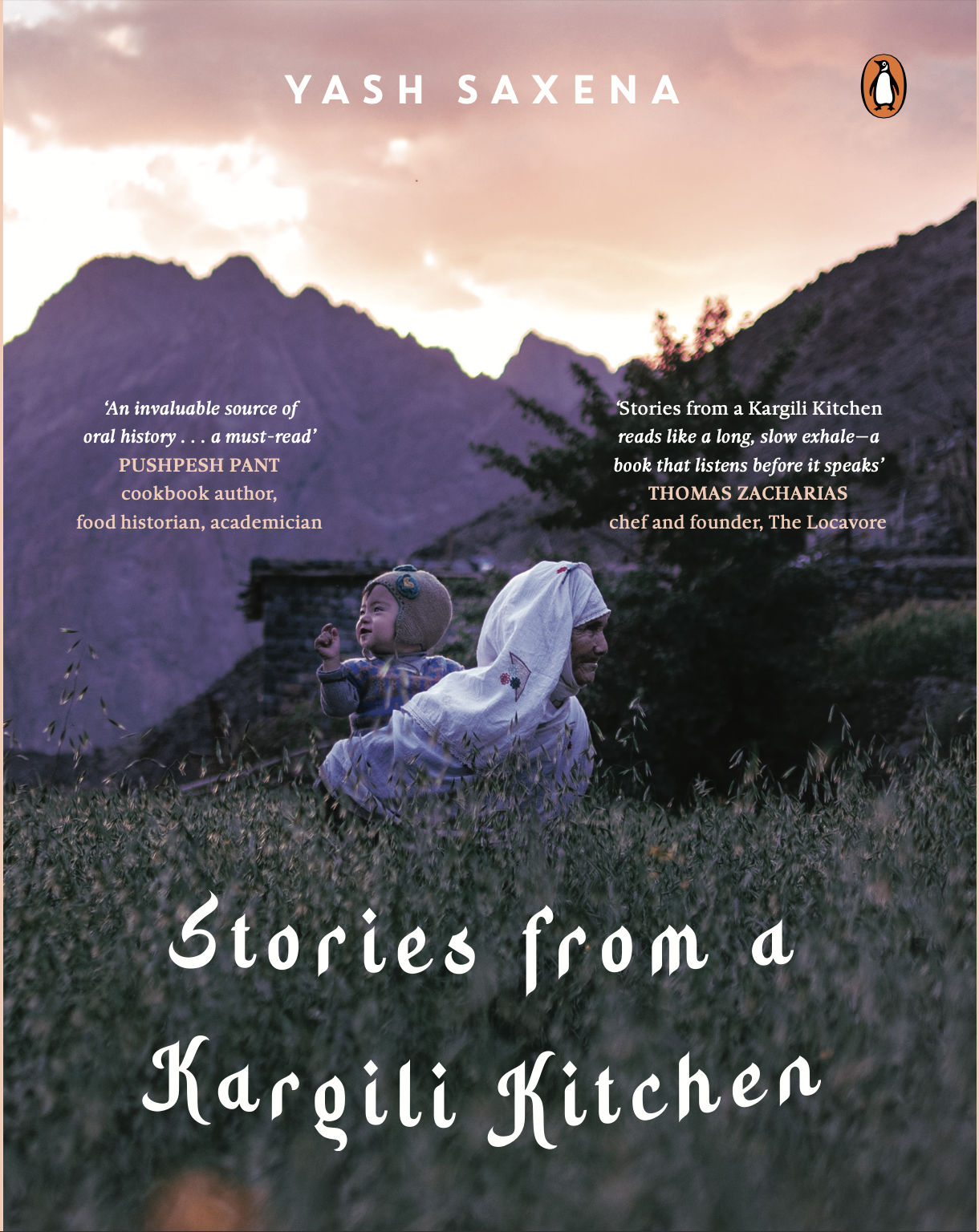
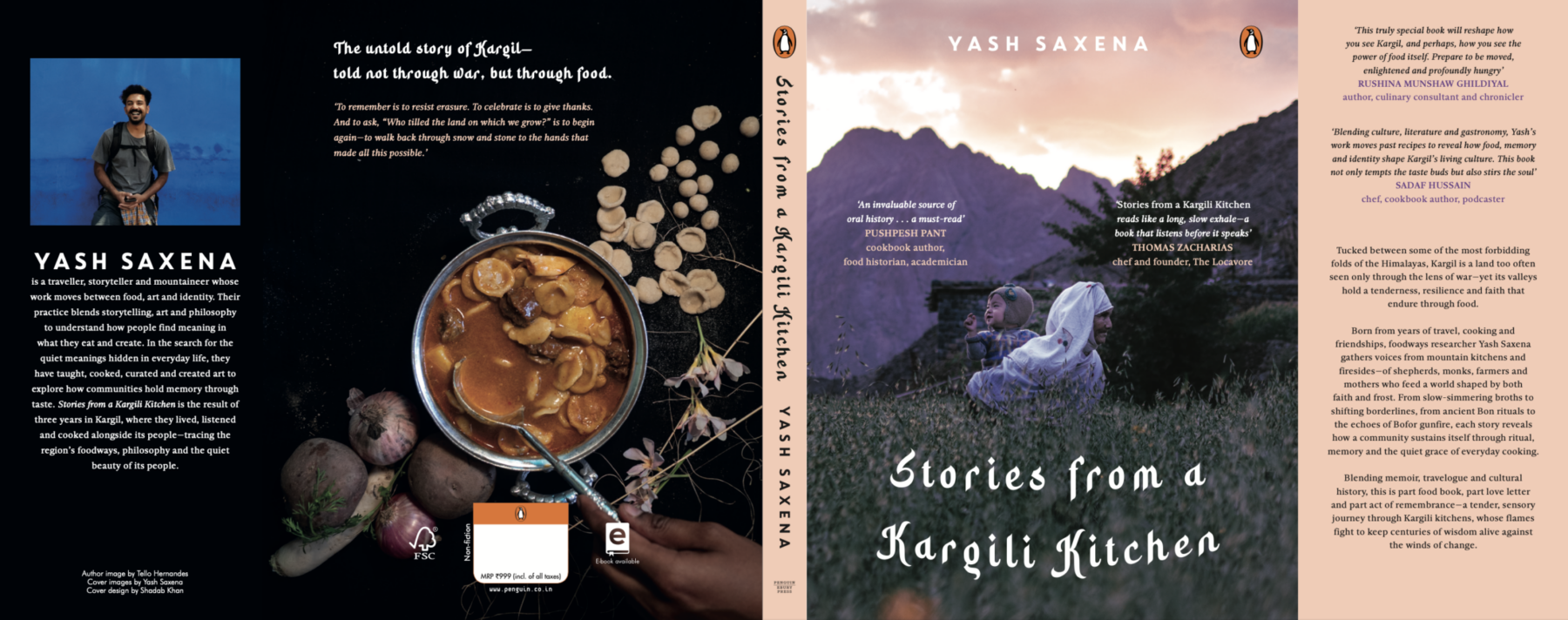
Stories from a Kargil Kitchen, produced by Muzzamil Hussain (Roots Ladakh) in collaboration with the author Yash Saxena and the researcher Sneha Nair, presents the diverse foods of Kargil.
https://www.feamag.com/food_magazine/Culinary-Enterpreneurs-Sep-Oct-2026.pdf
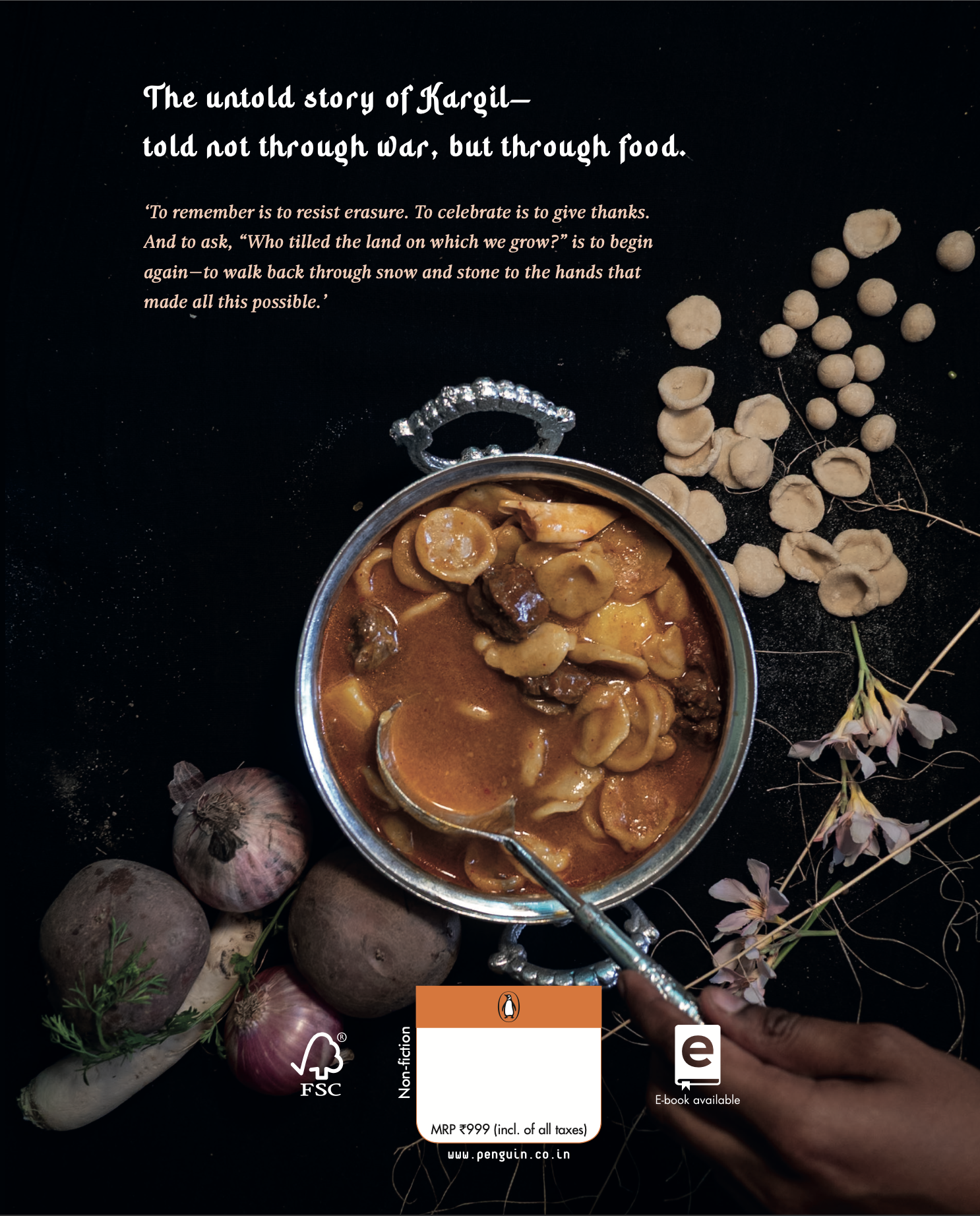
Strangthuk
(Dard Aryan: Strangkhyutuk)
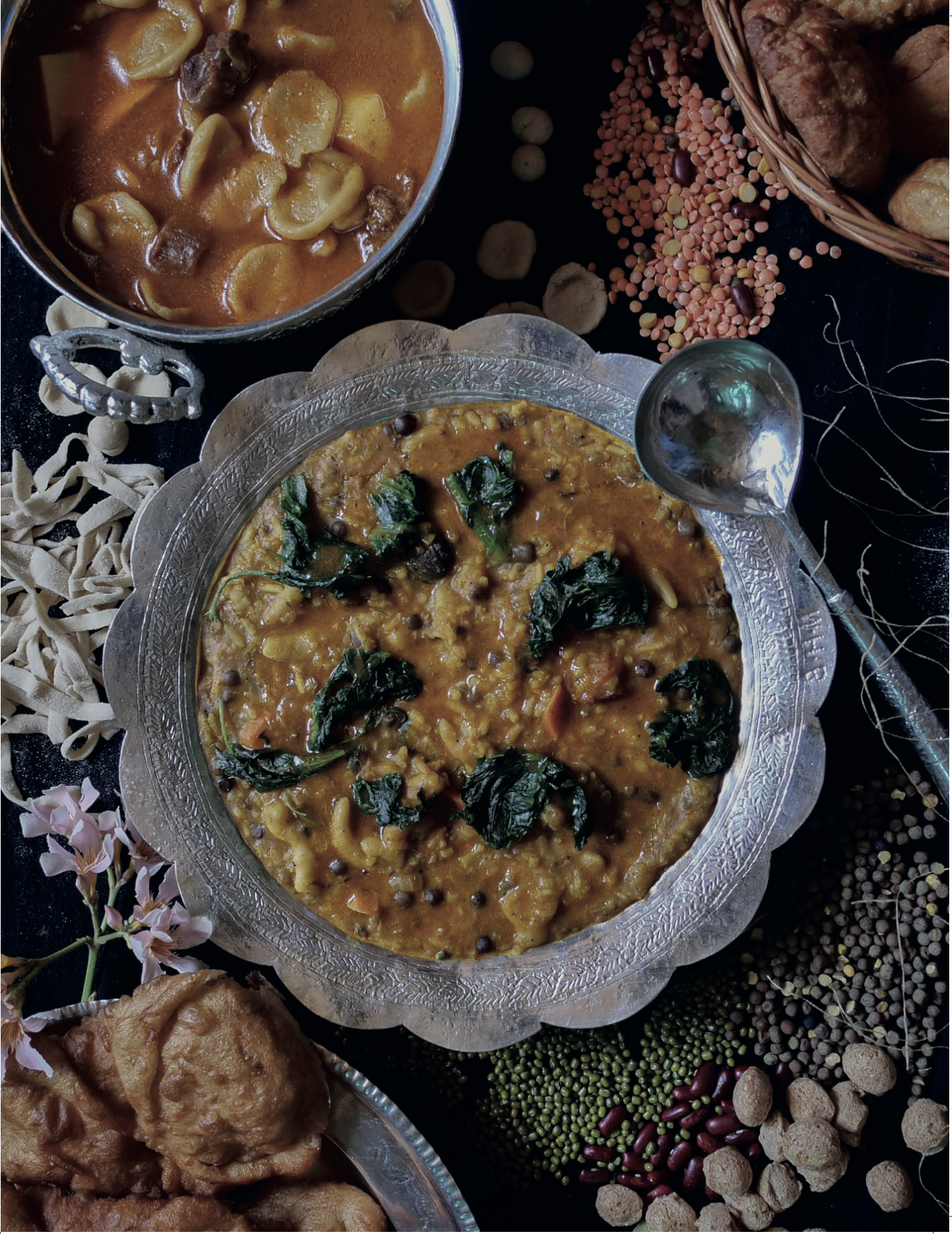
The word ‘strang’ loosely translates to ‘out-field’, and ‘thuk’ refers to soup. So, Strangthuk refers to a hearty soup traditionally prepared outdoors in large quantities for anyone and everyone. This dish brings together nearly every staple found in a Kargili kitchen—vegetables, beans, lentils, meat, spices, and even black tea—into a single, nourishing melting pot. In a way Strangthuk is a close symbol of Kargili foodways.
More than just nutritious and warming, strangthuk holds cultural and spiritual significance. It is believed that cooking and sharing this dish helps relinquish any trouble that may have befallen the community, such as illness or the presence of evil spirits. It is especially common during the Islamic month of Safar.
One of the key ingredients across Kargil is dried Himalayan turnips and rutabagas. What makes turnip an ideal crop in this region is its high yield even in times of water shortage. Interestingly, scientific studies have shown that consuming turnips improves tolerance to hypoxia, which supports life at high altitudes. In Sowa Rigpa, the traditional Tibetan system of medicine, turnips are considered a potent medicinal food, valued for their abilities to ‘clear heat’, ‘detoxify’ and ‘alleviate fatigue’.
A well-made strangthuk is all about balance—each vegetable, bean and cut of meat must be added with care, allowing each ingredient to be cooked to its perfect doneness.
INGREDIENTS
For Bakzan (Pasta)
- 1 ½ cups narjen (unroasted barley flour)
- 1 cup bakphey (local wheat flour)
- 1 pinch salt
- Water
INSTRUCTIONS
For Bakzan (Pasta)
- In a large bowl mix the bakphey with narjen together along with salt. Create a small depression in the middle.
- Add water slowly and knead until you get a firm dough. Cover and let it rest for 10–15 minutes.
- Take a chunk of the dough and roll it between your palms until you create elongated tubes. Roughly break the dough tubes into inch – long pieces. Lightly dust the pasta so it doesn’t clump together.
INGREDIENTS
For Shorba (Soup Base)
- 1 kg bone-in sha (mutton)
- 1 onion, diced
- 1 cup stranma (carlin peas), soaked overnight
- ½ cup nakstran (turtle beans), soaked overnight
- 1–2 black cardamom pods
- ½ tsp black pepper
- ½ tsp salt
- 1.5 litres water
INSTRUCTIONS
For Shorba (Soup Base)
- In a big pressure cooker, add all the sha, onion, black cardamom, pepper, salt, and water.
- Cook the mutton for an hour on medium flame or 3–5 whistles until cooked. The meat should be cooked through but not fall off the bone at this point.
- Empty the meat and its stock into a large pot and add the soaked stranma and nakstran and cook for another ~25 minutes on medium-low heat or until the peas are tender.
As per custom, strangthuk is always made out in the field and cooking for 30–40 people is a standard affair! It is suggested that the dish is consumed while it’s hot because as it cools down, it keeps getting thicker due to the starches in the pasta, rice, and beans. Strangthuk is a perfect dish for cold winter days and gatherings when cold bones need some livening up.
About the author
Yash Saxena
Yash Saxena is a traveller, storyteller, and mountaineer whose work moves between food, art, and identity. Their practice blends storytelling, visual art, and philosophy to understand how people find meaning in what they eat and create. In search of the quiet meanings hidden in everyday life, they have taught, cooked, curated, and created art to explore how communities hold memory through taste. Stories from a Kargili Kitchen is the result of three years in Kargil, where they lived, listened, and cooked alongside its people, tracing the region’s foodways, philosophy, and the quiet beauty of everyday life.
Yash has studied Food Anthropology and Food History under Prof. Pushpesh Pant and Dr. Kurush Dalal, and has conducted courses on food history, philosophy, identity, and culture. They also create immersive food experiences that bring together storytelling, place, and social stratification.
Deeply interested in the boundaries between the Self and the Other, Yash uses food, art, and storytelling as tools to explore how empathy emerges, challenge inherited ideas of identity, and create spaces for dialogue across cultures.
Yash Saxena
Author- Stories from a Kargili Kitchen