
Chef Sabrina Jawed Suri
I was born in Kashmir, bought up in Delhi. My father was from Lahore and my mother is a Kashmiri Muslim. So I have grown up experiencing a plethora of cuisine tradition and culture.
My childhood has nostalgia of rich Punjabi food (influences from the side of Punjab that is now part of Pakistan) and Kashmiri culture and ethics both in terms of food and hospitality.
Both my maternal and paternal families believed in treating our guests as God’s blessings.
I have grown up seeing my grandparents inculcating zero wastage and preserving food techniques, making use of scraps like watermelon rind, pea pods and banana peels used to cook delicious dishes.
While I was awaiting my 12th results, I applied to and joined the aviation sector. I got married at the age of 20 and by 25, I had both my boys. In 2013, I took a sabbatical from flying for a couple of years.
I began to think of a home-based enterprise that would enable me to be with my boys.
I was advised to start looking for jobs as it is not possible to earn from home. I saw women selling home-made products using telephonic apps. I ordered some pickle from one of the ladies to understand how it worked. I had made Shahi Tukda and I decided to put it in the group. When you’re first starting off, there’s a lot of trepidation of whether you’ll be able to do it or no . And to my surprise within an hour all of it got sold.
And then I remembered what my maternal grandmother and my mother-in-law always told me, how a person’s mood would reflect in the food he or shw is cooking. Food absorbs energy and the happier the person cooking is the tastier food will turn out. But the moment of truth was the challenge of packing, ricing and delivery. I took it on my chin and jumped in with both feet into the deep end. I started delivering myself till I found solutions. I was so excited and passionate about people trying my food and the appreciation I got after they tasted.
A customer who was from UK made a group called Sabrina‘s Kitchen, and I saw a flood of people joining the group. The gauntlet was really thrown down. She was kind enough to add people in that group and every day whatever I used to cook at home I would post. People used to order and so that’s how slowly and steadily people started ordering in bulk and I got party orders. That’s when I decided I have to work on my niche and master Kashmiri cooking skills.I spent time with the local wazaas, learnt the techniques and science behind the Kashmiri food – the emphasis on slow-cooking, smoking, and fermentation to produce hearty, warming food, where ingredients like dried fruits, yak and sheep cheese, rice, meat and buckwheat are staples.
I came back to Mumbai and got my first opportunity for a popup with The Lalit in Mumbai, and we got an outstanding response. This started my series of food festivals which went really well. As time passed by I realised Kashmiri food was under the shadows of Wazwaan. As all my childhood memories kept flashing on my mind – fermentation, slow-cooking, preservation of the vegetables and meat .So I decided to focus on lost and rate recipes. There is so much more than wazwaan to Kashmiri cuisine. The landscape ensures we have lot of greens which chefs aren’t introducing to Kashmiri cuisine outside Kashmir. So there are certain dishes like Shab deg Shab deg or shab daig which is a slow-cooked turnip and mutton stew, traditionally left to simmer overnight. “Shab” means ‘night’ and “daig” means ‘cooking pot’ in the Persian language. Most people don’t don’t Kashmiri food is influenced by Persian cuisine.The dish has been described as Mughlai origin from the Kashmir Valley
shufta a traditional, rich Kashmiri dessert often served at weddings and celebrations, featuring a luxurious mixture of dry fruits, nuts, and paneer coated in a spiced sugar syrup. It is a nutritious, high-energy dish, commonly prepared during winters, and typically includes almonds, cashews, raisins, walnuts, dried coconut, and dates.
kaleeng the thick membrane that covers the sheep’s head, skull and all. Apparently, Grandma used to lightly roast the skin over glowing charcoal to burn off any unwanted bits. Then the pieces would be chopped coarsely and set to cook with spices and minimal liquid over a low fire for hours. The gelatinous nature of the membrane would develop on low heat – surely the forerunner of sous-vide cooking!
Tchaap Maaz was made, as far as I can tell, only in Ganz Khod, the little alley of Srinagar’s Old City It was the alley of sheepskin curers who did a side business of making sausages using the sheep gut as casing and chopped entrails as the filling. Excuse me if it sounds less than felicitous, but people of my generation look back with great nostalgia at what was essentially a step up from plain old vegetables but lower down the ladder than meat.
Hokh Syun (or Houk Sun) is a traditional Kashmiri culinary practice of sun-drying vegetables during summer and autumn to be consumed during the harsh, snow-covered winters. Common items include tomatoes ruwaang hachi bottle gourd all hatchi aubergines Wanan hachi and lotus stems (nadur), which are preserved to maintain food supply, accordingly.
I use to see my grandmother doing this every time I went for my summer vacation. We had a huge attic where she would spent hours tying ropes and then hang all these vegetables to sundry. Every few days she would go and toss and turn around all of these vegetables. Infact not only vegetables but she use to sundry meat and fish too.
yaajji is One such snack that is deep and enjoyed is enjoyed with Noon chai (salty). It’s is a renowned kashmiri snack made from rice flour and walnut which many people are still not familiar with.
While Wazwan dominates the culinary narrative of Jammu and Kashmir, several micro-regional and community-based dishes from the valley and Jammu region remain under-promoted and largely restricted to home kitchens or specific rural areas.
So every time I do a food festival, I make sure I add some lost recipe from parts of Gurez, Banihal or pandit cuisine like
Khatta Meat is a popular Dogra community mutton delicacy from Jammu (not strictly Kashmir) known for its distinctive sour taste, typically achieved using dry mango powder (amchur), tamarind, or pomegranate seeds (anardana). The dish is characterized by tender mutton cooked in mustard oil, often finished with a unique smoking technique using red-hot coal and ghee.
Ambal Ambal is the pumpkin cooked with saunf, sweetness of gur, fenugreek seeds, tanginess of tamarind paste and namak, mirch, haldi. These dishes are traditionally cooked on the day before a wedding on the occasion of Saant
These are some of my top dishes:
Masale Tchot is a traditional Kashmiri street food wrap, often enjoyed as a spicy and tangy breakfast or snack. It features warm lavasa bread (a soft, thin Kashmiri flatbread) filled with boiled, mashed white peas and a pungent chutney made from radish, green chilies, yogurt, and spices.
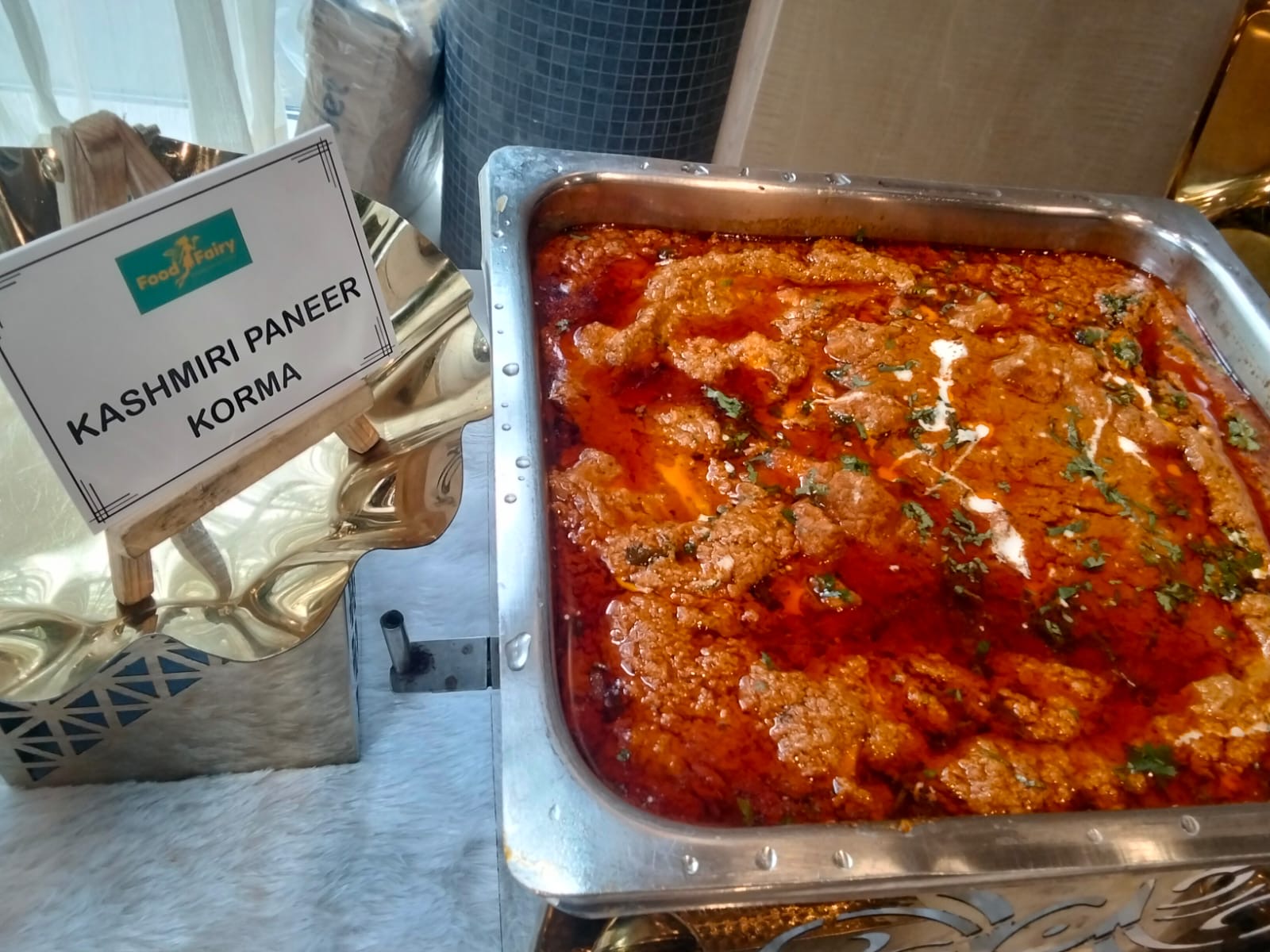
Chaman qaliya Tchaman is a classic vegetarian dish from Kashmiri cuisine particularly popular within the Kashmiri pandit community. It features cubes of fried paneer (called chaman in Kashmiri) simmered in an aromatic, milk-based yellow gravy
Gogji ta Maaz
Turnips and mea
These dishes are minimalist when it comes to ingredients but yet so flavourful on your palate. Traditionally all these are slow cooked in copper vessels.
Haaq most commonly refers to a staple Kashmiri dish of leafy green (collard greens, spinach, or knol khol) cooked simply with mustard oil and spices.
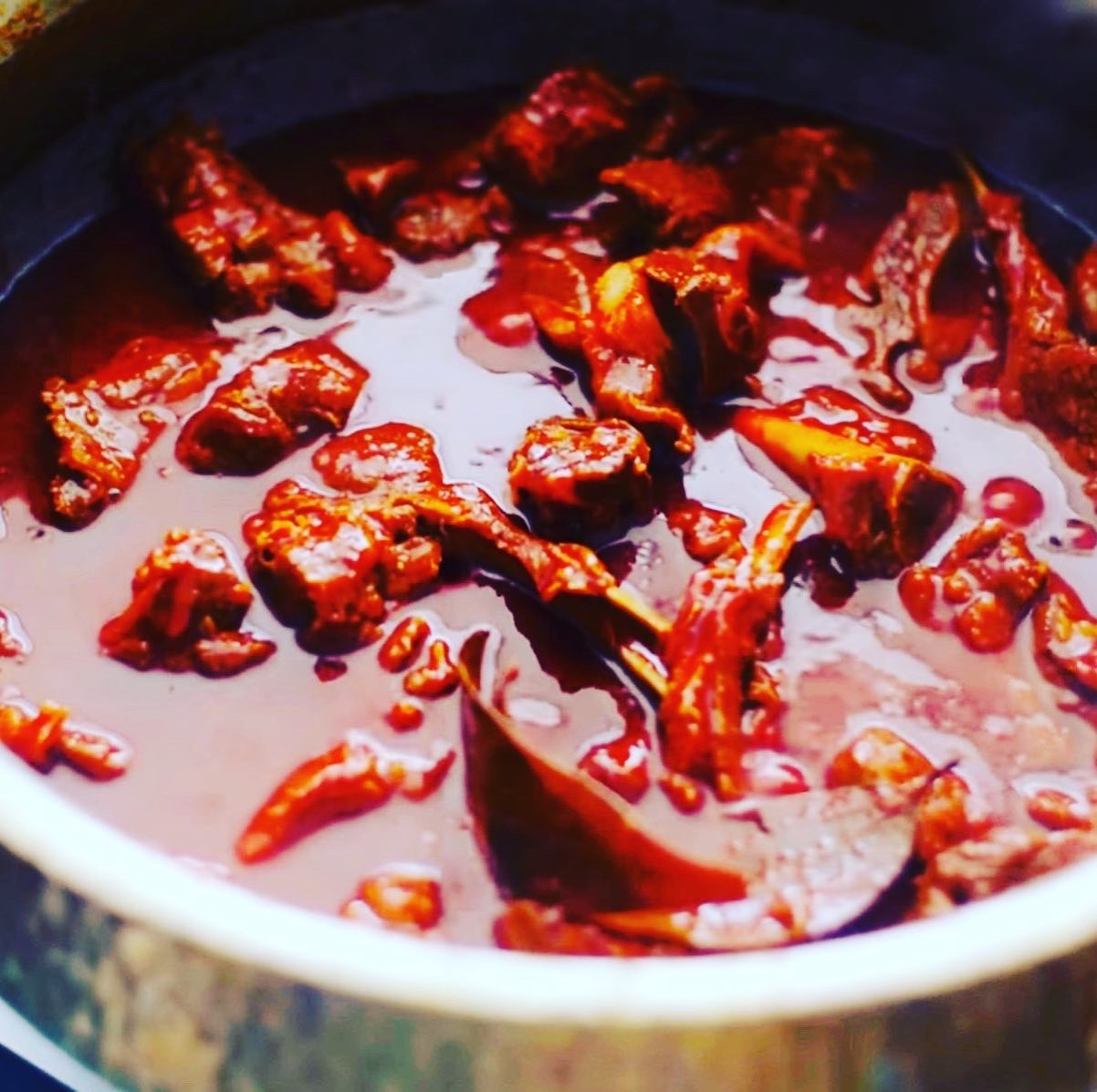
Rogan Josh is an aromatic curried meat dish in Kashmiri cuisine, from the time of the Mughal Empire but influenced by Persian cuisine. It is one of the main dishes in the wazwan, the traditional multi-course Kashmiri feast
Tabak maaz, also called qabargah is a traditional Kashmiri dish made from lamb ribs that are simmered in milk and spices and then fried. It is often served during special occasions, festivals, and as part of the traditional multi-course meal known as wazwan
Kashmiri trout, particularly rainbow and brown trout introduced by the British in the early 1900s, thrives in the region’s cold, pristine glacial streams. Fresh water catch These tender, low-scale fish are a highly prized, protein-rich local delicacy commonly prepared as fried fish or in traditional, flavorful recipes, with major rearing units in places like Kokernag.
Kashmiri Pulav also served as Meeta pulav in some parts of undivided Kashmir. Which again is influenced by Persian zerkish pulav
From my paternal side, I learnt dishes from Lahore like:
Paya Shorba is a nutritious, gelatinous slow-cooked soup made from goat or lamb trotters (feet), popular in Indian and Pakistani cuisine. It is rich in collagen, beneficial for joint health, and known for its intense aroma and flavorful broth.
Lahori Nalli Nihari is rich, slow-cooked stew featuring mutton shanks (nalli) and marrow bones simmered until the meat is incredibly tender.
Peshawari Chapli kebabs are prepared with raw mince meat, then marinated variously in coarse wheat flour, crushed coriander and pomegranate seeds, ground cumin, salt, freshly chopped tomatoes, onions, fresh cilantro and green chilli peppers
In Mumbai, we face difficulty in getting the right texture for making Rishta n gostab. These are the small meat balls which are hand pounded immediately after cutting the goat, so the temperature needs to be maintained under 4°, so that is one of the biggest challenge that I face.
For me gathering lost Kashmiri recipes required a combination of oral history, traditional culinary techniques, and a focus on specific, fast-disappearing dishes like Kondour Kashmiri Kandur (Girda/Czot) which is a traditional fermented flatbread, often baked in a tandoor with a crispy exterior and soft, chewy center. It is prepared by fermenting wheat flour/maida, yogurt, salt, sugar, and yeast (or overnight rest) to form a soft dough, flattened with fingers, coated in poppy seeds, and baked until golden.
Tahar (or Tehri) is a traditional Kashmiri yellow rice dish, cooked with turmeric, mustard oil, and salt. Often prepared on Fridays or special occasions, it serves as a, symbol of community, togetherness, and cultural heritage, usually served alongside curries or distributed as a sacred offering. Sometimes meat is added too.
Hokh Syun is a dish of dried vegetables).
Researching this cuisine requires focusing on the two distinct, yet interconnected, culinary traditions: We as Kashmiri Muslim incorporate heavy use of onion, garlic, and yogurt, and Kashmiri Pandit food is yogurt and subtle spices-based, focusing on aromatics like fennel powder and dry ginger. So I try to balance both styles in my cooking.
Promoting lesser-known culinary traditions involves a mix of storytelling, digital marketing, experiential events, and strategic partnerships. Key approaches include highlighting the history and community context behind dishes, adapting recipes for modern kitchens, and leveraging social media influencers to reach broader audience
I have started a supper club in the name of Malun T Variv Khen Chen (malun means mom’s house, variv means marital house with a joint family, and khen chen means a gathering for food. Where stories are shared and food is served in a traem (A large, traditional copper plate designed for communal dining). And meaning full memorable conversation takes place. And never forgetting experiences are engraved in the guests’ memory
We have a very famous dish in wazwaan called gostab. Often referred to as the king of Kashmiri wazwan, The origins of goshtaab are rooted in the culinary traditions of Kashmir, which have been influenced by Central Asian, Persian, and Mughal cuisine. The dish is believed to have been introduced to the region during the reign of the Mughal emperors, who brought with them a tradition of meat-based dishes. Over time, goshtaab evolved into a distinctive Kashmiri specialty, reflecting the region’s unique blend of spices and cooking This is also known as the full stop of the for the feast as it is served in the end of the wazwaan.
I have curated Yakhni risotto for an Italian restaurant. Where I used the curd based gravy called Yakhni as a sauce with risotto. And topped it with Tabak Maaz for meat lovers, fetta for vegetarians
I feel each day is an achievement as daily I learn something new be it cooking or life in general. Each passing day is a promise to do better than the previous day. I strongly believe in the law of paying it forward and making the world a better place to live. My mother has taught me something that’s engraved in my heart and mind. We rise only when we uplift others.
In March 2020, I won the best home chef award category at JW Marriott. I had the opportunity to curate a menu for Kunickaa Sadanand and got featured in her blog. I have done popups for 5 star hotels and even a high-profile popup for the prestigious DLF The Camellias, which has very high-profile limited guest entry. I also remember a menu for Akash Ohri for his mother’s private birthday party, where guests were flown from all over the world.
I have also catered to prestigious clients under my brand, Fairy Food by the Sabrinas Kitchen, which is largely into catering where some percentage of the revenue goes to underprivileged children and for women’s empowerment.
Future aspirations are evolving from technical mastery to leadership owning a restaurant, and mastering in niche culinary arts, but also to pay it forward to the world. I want to eventually build a community where there is work for underprivileged people not only women. Where vegetables and staples would be procured from local vendors, where women will come together by scaling up their skills. The enterprise would buy spice mixes, pickles and daily needs from families working from home.
ABOUT THE AUTHOR
Sabrina Suri specialises in Kashmiri, Mughlai, Indo-Persian, and Punjabi cuisine.