
Adya Organics: Building a Trusted Food Ecosystem Rooted in Vishmukt Ahaar
By Pallavi Sinha, Managing Director & Brand Builder, Adya Organics
1. What inspired your family to build Adya Organics?
This began with my father-in-law, Mr. R.K. Sinha. He had started a boarding school, and it was watching what went onto the children’s plates there that shaped everything that followed – he genuinely believed those children deserved food that was completely free of poison. That belief is what led him to set up our gaushala and start farming ourselves, rather than depend on a supply chain we couldn’t fully trust.
Over the years, he watched the same problem play out across Indian agriculture more broadly – pesticides entering fields that once grew clean, processing stripping the life out of grains and oils, a country with thousands of years of nutritional wisdom quietly trading it away for convenience. He had a name for the opposite of that: Vishmukt Ahaar – nourishment free from poison. It was never a marketing phrase for him. It was a life philosophy.
I came into this as his daughter-in-law, and what I brought to his conviction was the will to turn it into something that could reach today’s consumer – someone browsing Blinkit at midnight, not just someone who grew up eating the way he did. We spent a long time sitting across the table from each other asking hard questions: which ingredients could we truly stand behind, which processes could we never compromise on, and how do you carry a decades-old belief to a much younger customer.
What came out of those conversations is Adya – built on his lifetime conviction and shaped by a new generation’s energy to make it real. It’s a fairly unusual partnership for an Indian family business, where legacy usually passes from father to son. Ours passed from father-in-law to daughter-in-law instead.
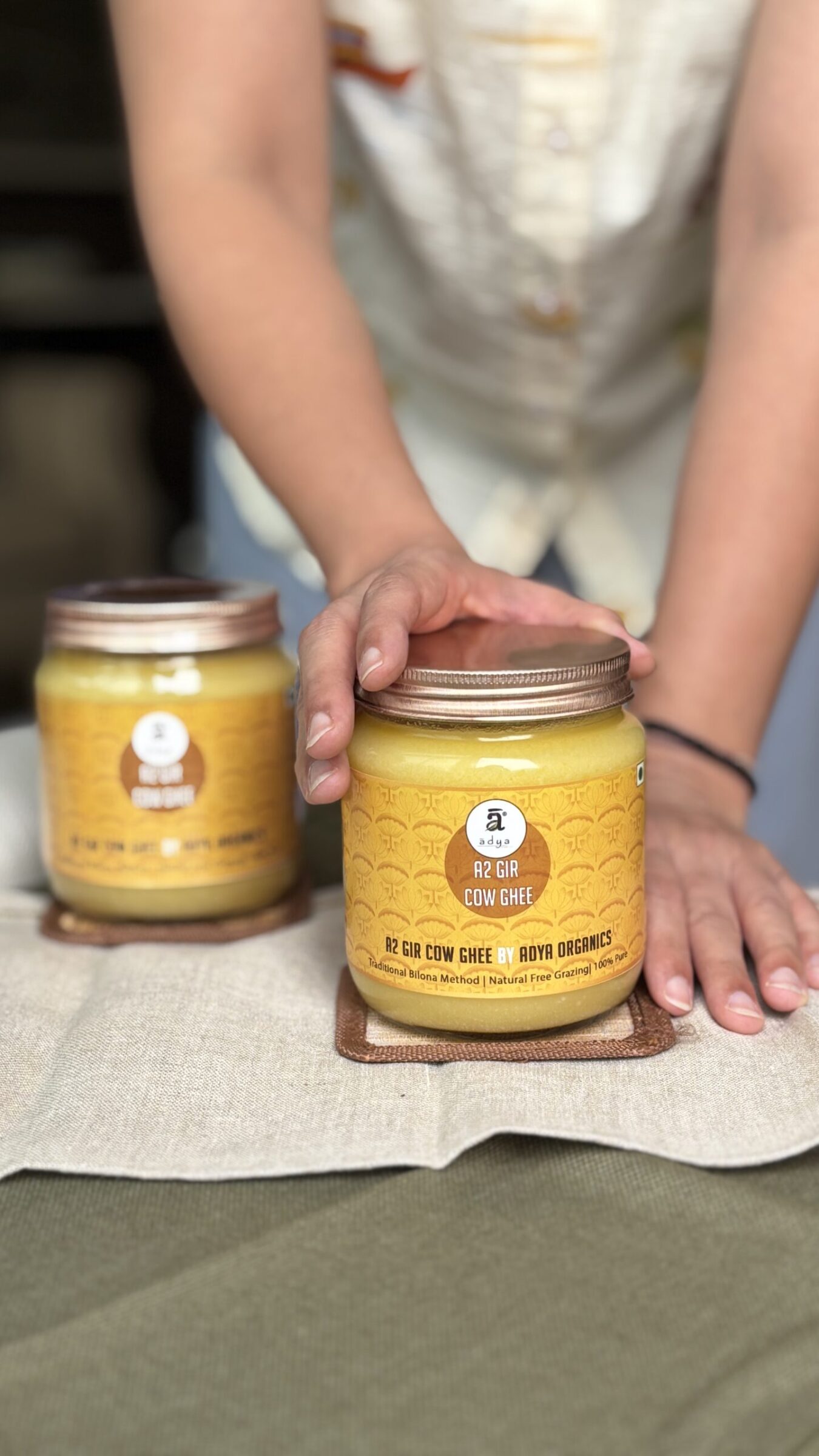
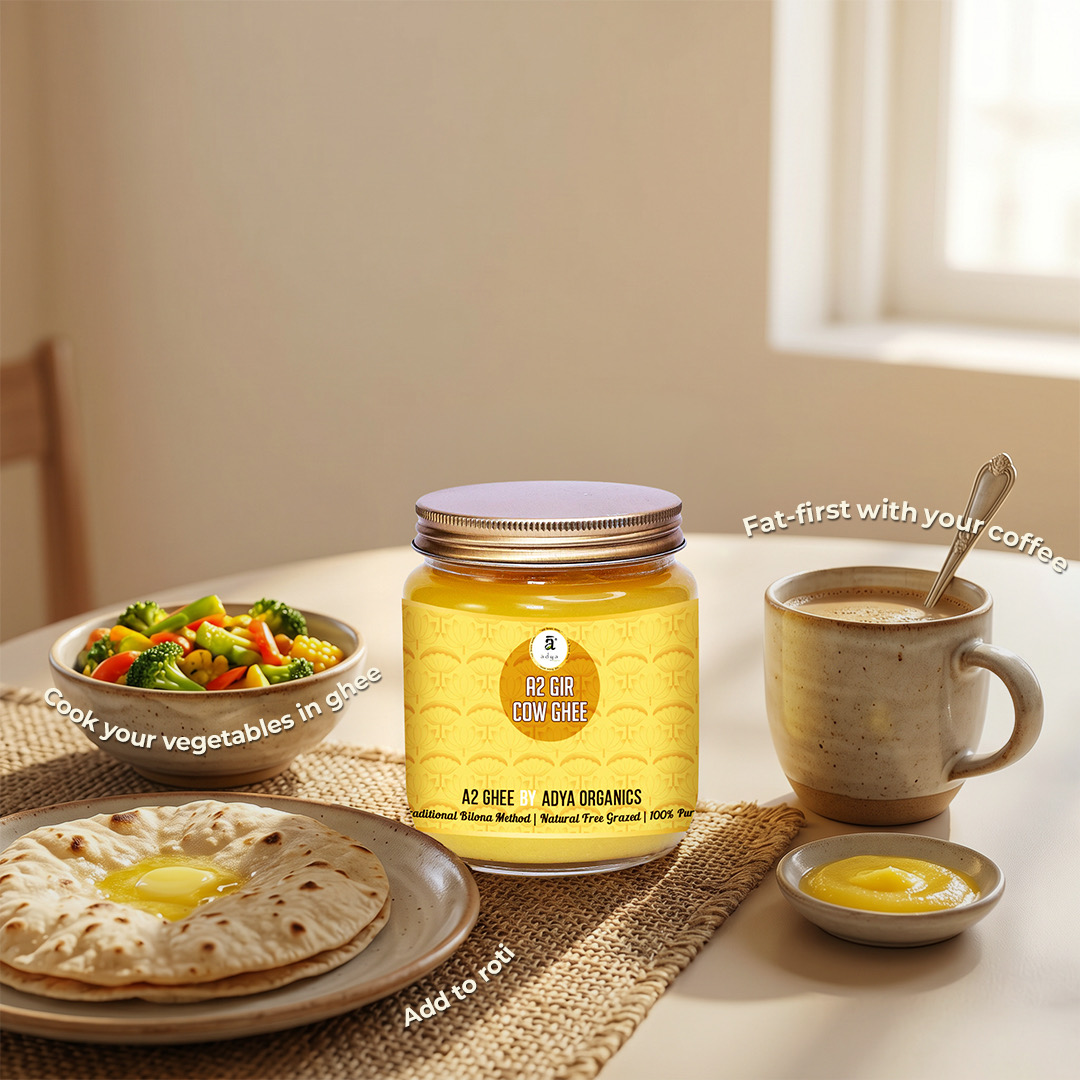
Over time, that founding belief expanded from ghee and dairy into honey, cold-pressed oils, millets, pulses, flours, jaggery and other traditional foods. The categories have grown, but the test hasn’t changed: would we feed this to our own family without hesitation.
2. What gap did your family see in the Indian food ecosystem that Adya Organics set out to address?
Mr. Sinha had been diagnosing this problem for decades before Adya existed as a brand: the absence of any real link between the process of production and the product that reaches the consumer. There may be quite a few stages between the farmer and the end product, and consumers have no means of knowing about the origin of their food and the manner of processing it.
We needed to create a model of operation where the place of origin will be as important as the end product itself. Therefore, our strategy is to combine our farming experience with relations with farmers and producer collectives in India.
Another problem that we found was the complexity of the Indian cuisine. A lot of traditional foods which used to be a part of people’s everyday life are now losing their place in today’s kitchens. We wanted to re-introduce the use of millets, traditional grains, ghee, jaggery and cold-pressed oils as staple foods of the day.
3. As a mother of 3, how do you see clean, healthy and organic food as today’s need?
As a mother, I look at food differently because the choices we make at home become habits for our children. We don’t always need complicated diets or expensive health products. The more important question is what we are eating every day.
For me, clean food means knowing what I am putting on my family’s plate and being comfortable with its ingredients and source. This is also why I believe traditional Indian foods have a lot to offer. Foods such as millets, pulses, ghee, jaggery and cold-pressed oils have been part of our food culture for generations.
The need today is to make these choices easier and more trustworthy. That is what we try to do at Adya – take familiar foods and give consumers greater confidence in what they are buying.
4. Does organic mean more for brands than just a label, certification or gimmick?
It has to. If organic becomes only a label on a packet, we have missed the larger purpose behind it.
Our philosophy for Adya has always been VishmuktAhaar – nourishment free from poison – and that is the actual standard we hold ourselves to, certification or not.
For us, the idea begins with the soil and the way food is grown. It is about reducing dependence on synthetic chemicals, using natural inputs and being mindful of the larger ecosystem. On our farms, we use inputs such as Jeev Amrit, Gau Kripa Amrit, mustard cake and Matka Khaad as part of our farming practices.
Certification is important because it provides a defined standard and gives consumers something they can verify. But the responsibility of a brand goes beyond putting a certification logo on a pack. It also means being honest about sourcing and processes.
Ultimately, organic should represent a way of producing food, not simply a marketing claim.
5. How do you ensure authenticity, traceability and consistency across your products?
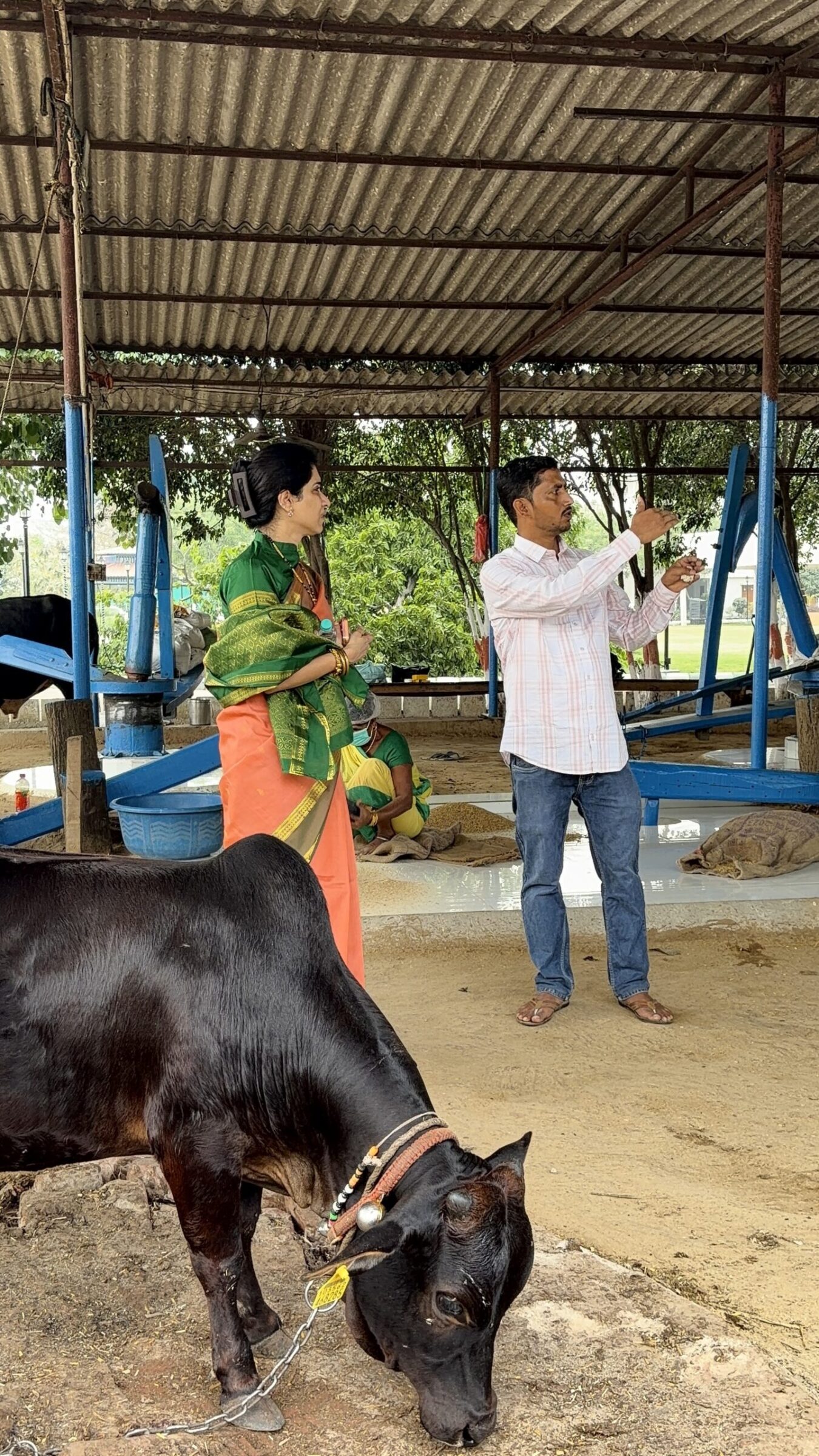
We start by staying as close as possible to the source. We have our own farms in locations including Dehradun, Bihar and Noida and we also work with farmers and local producer groups.
The process is different for every category, so there cannot be one quality system for everything. Honey, for example, requires attention to its floral source and handling, while oils, grains and pulses require a different approach to raw material selection and processing.
Testing is an important part of this process. Our Multi Flora Honey, for example, goes through quality and pesticide checks and is lab-tested for purity.
At the same time, consistency does not mean taking away the natural character of food. Our goal is to ensure that every product meets a reliable standard for quality and safety while retaining what makes that food naturally different.
6. How do you win the trust of consumers?
We don’t think trust can be built through advertising alone. It comes from what a consumer experiences after buying the product.
That means the quality has to remain consistent, the information we provide has to be honest and the product has to deliver on what we promise. We also believe consumers should be encouraged to ask questions about their food.
Today, people want to know where their honey comes from, what kind of oil they are buying, how their ghee is made and whether a product is genuinely what it claims to be. We welcome that level of questioning.
For a brand, this creates accountability. We have to keep improving our sourcing, testing and processes. In the long term, that repeated experience – rather than one campaign or one certification – is what turns a first-time buyer into a consumer who trusts the brand.
There is a simple test we use internally at Adya: what we wouldn’t feed our own children, we will never sell to yours. If a product can’t pass that test, it doesn’t reach the customer.
7. What kind of challenges did you face to convince consumers to pay a premium for genuinely organic and responsibly sourced food?
Perhaps the most difficult problem is making people aware of what they are actually paying for when they buy products.
Responsible agricultural practices, along with smaller-scale production systems, often require a larger labour input, increased care and, in some cases, decreased productivity. All these factors increase the price of the finished product.
Another problem is trust, as the market has already witnessed many companies using such terms as “natural”, “pure” or “organic” as a marketing trick. Consumers have every right to be skeptical about these terms.
What we do not want is for consumers to pay a premium price just because a product has an “organic” label. The added value must be a result of improved quality, improved sourcing, testing and production practices. The more transparent the industry is, the easier it will be for consumers to make their choice.
8. How can the organic-food industry create better economics for farmers while keeping products affordable for consumers? How have women farmers and marginalised farmers benefitted from your brand?
A sustainable food business has to work for both ends of the chain – the farmer and the consumer. If farmers do not receive fair value, there is little incentive for them to continue with better farming practices. At the same time, organic food cannot remain affordable only for a small section of society.
One way forward is to create more direct relationships between producers and brands and reduce unnecessary layers in the supply chain.
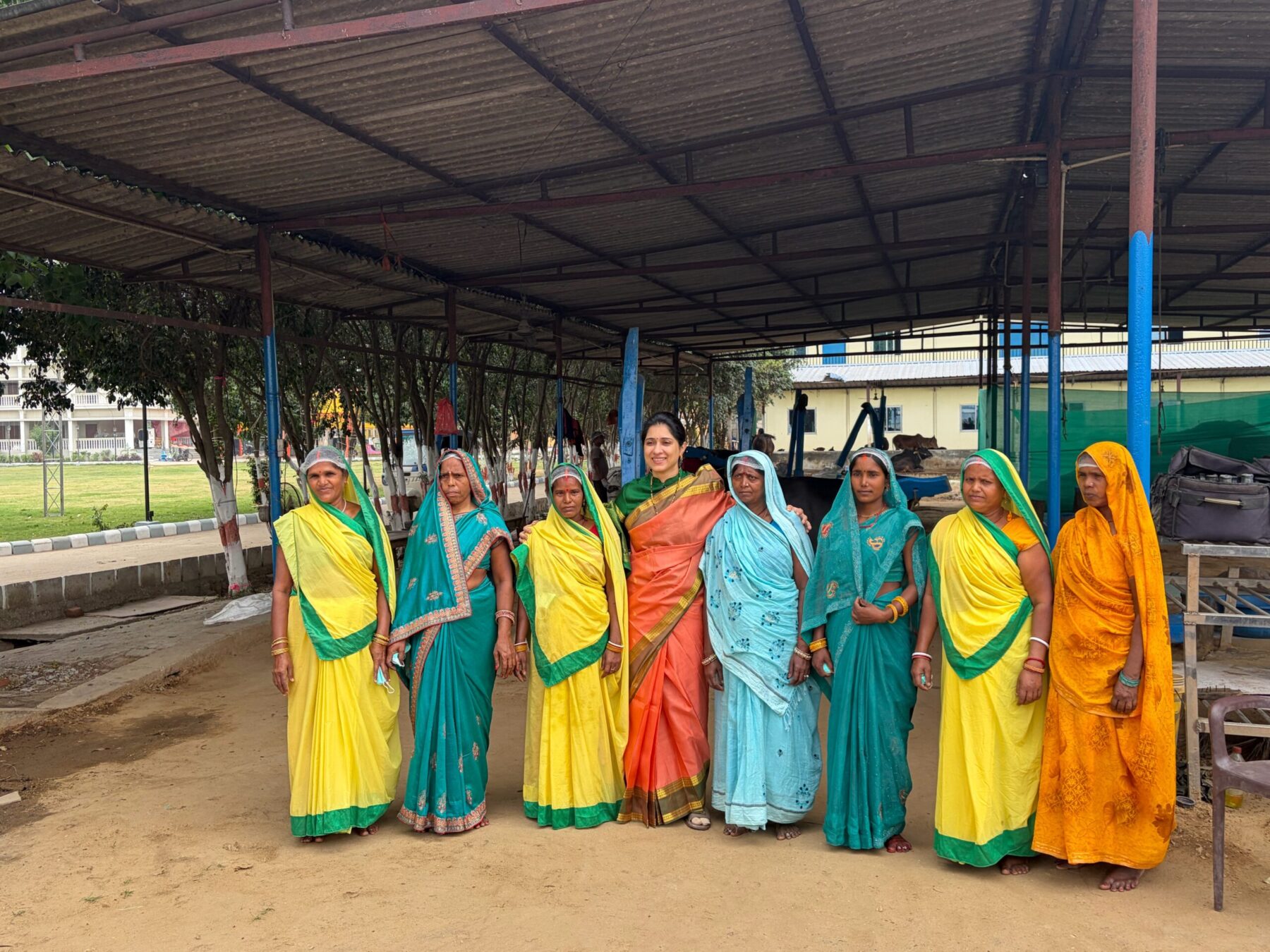
At Adya, we work with farmers and also source produce from women’s groups around our farming locations. This gives these groups access to a larger market and creates an additional avenue for income.
Over time, we want these relationships to become stronger. Better market access, predictable demand and fairer value sharing can help small and marginal producers benefit while allowing brands to build a more reliable supply chain.
9. What have been the biggest challenges in scaling an organic food business in India? Do you think organic food can be scaled or is it inherently a small-batch business with growth limitations?
The biggest challenge is scaling without losing control over quality. Organic and natural farming is closely linked to seasons, soil and local conditions. You cannot treat it exactly like an industrial production line where output can simply be increased to meet demand.
As a business grows, the sourcing network also becomes larger, which means maintaining the same standards across farmers, raw materials and processing becomes more demanding.
But we don’t believe organic food has to remain a small-batch business. It can scale if the growth happens alongside the ecosystem. That means investing in farmers, building reliable sourcing networks and putting strong quality systems in place.
For Adya, scale should not simply mean selling more products. It should mean bringing more farmers and consumers into a system that can grow without compromising the principles on which the business was built.
10. How do you balance traditional Indian food wisdom and organic farming with modern consumer expectations?
For us, tradition and modernity are not in opposition. In India, there exists a well-developed food culture and many of the foods that are being rediscovered as “healthy” today have been a part of Indian kitchens until now.
What matters is how relevant the food becomes for today’s lifestyle. A modern consumer might appreciate millets or cold-pressed oils but may not have the same amount of time and knowledge about food preparation like previous generations did.
It is here that branding comes into play. We can keep the core ingredient and wisdom intact while making it convenient and consistent.
Our product line of millets and traditional grains, cold-pressed oils, ghee, jaggery and honey shows the way we think. It is not about changing the traditional eating habits. It is about making it easy for a new generation.
11. Do you think the Indian consumer is conscious today about health and wellness, or are there misconceptions about organic food, nutrition, etc.?
The Indian consumer has indeed become more knowledgeable. Consumers are beginning to read labels and ask questions about the contents of their foods. However, all this knowledge has caused a lot of confusion.
Consumers are faced with several options in the market; there are terms like organic, natural, chemical-free, healthy, and preservative-free, which may confuse consumers. There is also a trend of looking for one “superfood” that will solve all problems.
We need to talk about everyday food practices. Health cannot be achieved through the intake of an additional costly product while ignoring the quality of our everyday food.
This is the reason why we value improvements to our everyday consumption products. Whether it is cooking oil, flour, sweeteners in recipes or honey at the breakfast table, making little improvements consistently can have far-reaching effects.
12. Which categories of food do you see rising in the organic market?
There is great potential in food products which fall under the category of everyday products as compared to health-related products alone. Cold pressed oils, millets, grains, pulses, sweeteners, ghee and honey are some areas where there is increasing consumer interest in the source of these products.
Another area where consumers would be interested in products is the ones which are minimally processed and have roots in the traditional diet. This point becomes very relevant for India since we already have a variety of grains, pulses, oils and other natural products.
Moreover, consumers are going to demand more than just “organic”. They are going to demand where it is grown, by whom and how was it processed and whether it has been tested or not.
This would be helpful for the industry since it would be able to reward quality over claims made on the label.
13. What are your future aspirations?
We want Adya to become a brand that families can trust for their everyday food choices. The ambition is not to build a business around a few premium organic products, but to create a much broader food ecosystem. That is really an extension of what Mr. Sinha set out to do decades ago with Vishmukt Ahaar – my role has been to build the systems and the brand that can carry it forward at scale.
We see opportunities across our existing categories – from ghee, honey and cold-pressed oils to millets, pulses, flours, jaggery and other traditional foods. At the same time, we want to deepen our relationships with farmers and producer groups so that growth creates value further down the chain as well.
Our long-term goal is to take the idea of clean, responsibly sourced Indian food to a much larger audience, both within India and beyond.
For us, growth will be meaningful only if we can achieve it without losing the connection to the farm, the farmer and the food itself.